Video

TITAN Watch – Custom Scorecards

TITAN Watch – Custom Scorecards
Learn how to build custom scorecards in SecurityScorecard to segment domains, IPs, and geolocations and monitor the risk that matters most to you.

Hello. Today, I’m gonna be going over custom scorecards within the security scorecard platform. They provide a unique and effective way for you to segment and zero in on specific domains and IPs or geo locations that have risk that matters to you from within a scorecard. They can be created around any vendor scorecard or around your own scorecard within the platform. To navigate to custom scorecards, you’ll find the top navigation bar underneath my organization. Please select custom scorecards. Once inside, if you have any existing custom scorecards created, you will see them in the list below. If not, this page would load empty. To generate a new custom scorecard, simply select new custom scorecard. You may title it whatever you like, apply the industry that is applicable, add a description for context, and add internal collaborators from your team who can edit and adjust the custom scorecard. You also have the ability to share privacy or visibility internally or externally as well. If you do select can view for anyone else, it becomes a searchable scorecard for all security scorecard users. This can be extremely helpful if you have a product specific set of domains and IPs that you would like to create a specific scorecard for your customer base to review and evaluate. Underneath sources, whatever scorecard you select will be the source scorecard. What the source scorecard means is it will leverage all domains and IPs within the digital footprint as well as all issue types within the scorecard. This can be helpful. You also have the ability to merge scorecards if you would like and add two or three scorecards to increase the scope of assets that you can filter by. As you scroll down, you will notice there’s a set filter selection. This gives you the ability to identify to the platform what IPs, IP ranges, or CIDR blocks that you would like to zero in on, to include, or exclude. You also can apply the same for domains, subdomains, geolocation. And if you have any assets tagged, you can pull those in as well. If you select domains or IPs, you do have the ability to include associated domains or associated IPs to make the filtering more effective and seamless. The option to include or exclude at the asset level can be helpful as well as potentially include or exclude certain risk factors or issue types from within the platform as well. Once you have configured your custom scorecard and the assets accordingly, you will notice the ability to preview the assets to see what type of information is going to be pulled in. The benefit to custom scorecards provides you the ability to create niche reporting scorecards for internal communication, zero in on a specific subset of assets in relationship to a critical supplier, providing you the ability to monitor assets that you directly engage with and or the public scorecard as well, giving you a true three sixty degree view of risk and a very configurable way to assess that risk as well. Once the custom scorecard is generated, it will be created and live within the custom scorecard page where you can click on any of the scorecards within this view and land on a scorecard overview page. This page looks, feels, and operates like any other scorecard view in the platform. You have the ability to report on it in a summary issues or detailed level, as well as leave it in a portfolio for continuous monitoring. Once this scorecard is created, it is also a part of our daily scanning cadence, there’s no manual requirement to refresh or update the scans against the assets within the digital footprint. I hope this was helpful. You have any questions, please reach out to the security scorecard team, and I’m looking forward to speaking with you. Thank you. Bye bye.

Custom Scorecards in the SecurityScorecard Platform

Custom scorecards provide a unique and effective way to segment and zero in on the specific domains, IPs, or geolocations where risk matters most to you all from within a scorecard. They can be built around any vendor scorecard or around your own scorecard within the platform.

How to Get Started

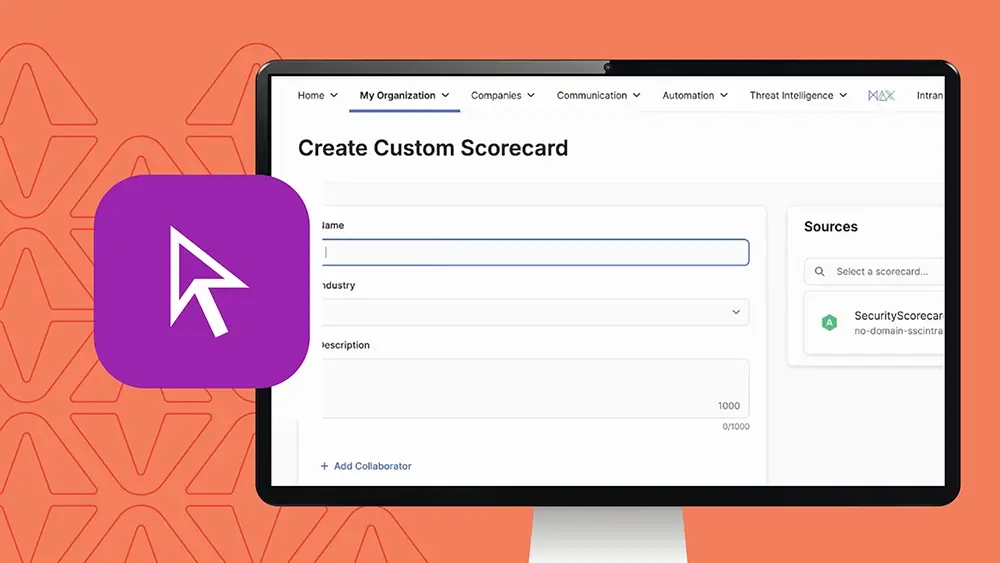
To navigate to custom scorecards, go to the top navigation bar, find My Organization, and select Custom Scorecards.

If you already have custom scorecards, they’ll appear in the list. If not, the page will load empty. To generate a new one, select New Custom Scorecard.

Setting Up a Custom Scorecard

From there, you can:

  • Title the scorecard whatever you like
  • Apply the applicable industry
  • Add a description for context
  • Add internal collaborators from your team who can edit and adjust it

Privacy and visibility: You can set the scorecard’s visibility internally or externally. If you select “can view” for anyone else, it becomes a searchable scorecard for all SecurityScorecard users. This is especially useful if you want to create a product-specific set of domains and IPs for your customer base to review and evaluate.

Source scorecards: Whatever scorecard you select under Sources becomes the source scorecard it will leverage all domains and IPs within that digital footprint, as well as all issue types within the scorecard. You can also merge two or three scorecards to increase the scope of assets you can filter by.

Filtering Your Assets

Scrolling down, you’ll find the filter selection, which lets you tell the platform exactly what to include or exclude:

  • IPs, IP ranges, or CIDR blocks
  • Domains and subdomains
  • Geolocation
  • Tagged assets

If you select domains or IPs, you can also include associated domains or associated IPs to make filtering more effective and seamless. You can include or exclude at the asset level, as well as include or exclude specific risk factors or issue types.

Once your custom scorecard and assets are configured, you can preview the assets to see exactly what information will be pulled in.

Why Use Custom Scorecards

Custom scorecards let you:

  • Create niche reporting scorecards for internal communication
  • Zero in on a specific subset of assets tied to a critical supplier
  • Monitor assets you directly engage with, alongside the public scorecard, for a true 360-degree view of risk in a highly configurable way

Once It’s Live

Once created, your custom scorecard lives on the Custom Scorecards page. Click into any scorecard to land on a scorecard overview page that looks, feels, and operates like any other scorecard in the platform you can report on it at a summary or detailed issue level, and keep it in a portfolio for continuous monitoring.

Custom scorecards are also part of SecurityScorecard’s daily scanning cadence, so there’s no manual requirement to refresh or update scans against the assets in the digital footprint.