This workflow is built for the TPRM analyst running day-to-day remediation, with visibility for the TPRM manager tracking resolution rates across the portfolio. If you’re the person deciding which fires to put out first, this is your workflow.
The problem: thousands of findings, ranked by the wrong thing
On the findings view, across the portfolio, that’s thousands of findings. Most tools prioritize based on historical experience, not what’s happening right now. That means:
- Some of the issues that matter most today aren’t prioritized
- Some that got flagged months ago are still at the top of the list
Presets built for what matters now
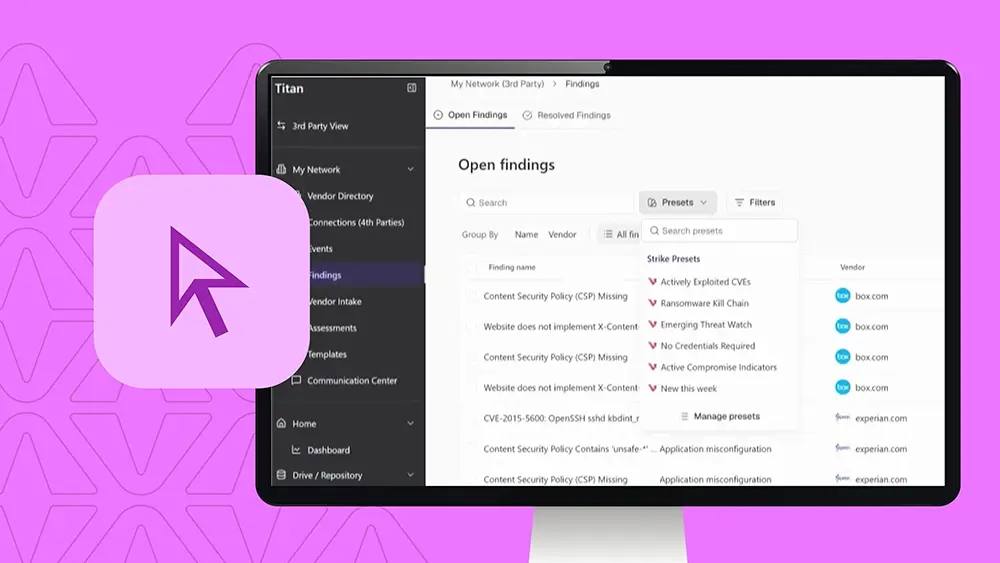
TITAN Secure ships with presets built by our STRIKE Threat research team. Instead of scoring findings by what happened in the past, these presets rank findings by what matters now.
One preset, called Emerging Threat Watch, narrows thousands of findings down to the ones tied to active threat campaigns today. Same portfolio, same findings — but now the list reflects the current risk landscape instead of a correlated score set.
Finding details: is it being exploited right now?
Click on any finding and you’ll get the specifics: the CVE, how severe it is, and whether it’s under active exploitation using CISA’s KEV list.
That KEV status is what keeps this forward-looking. It’s not just how bad the vulnerability could be — it’s whether attackers are actually using it right now.
Taking action on a finding
From there, you can choose an action:
- Request remediation: sends a targeted message to the vendor about this one finding — not a bulk list of everything wrong in their environment
- Send an internal message
- Accept the risk formally
- Flag it to boost internal prioritization without notifying the vendor at all
When you request remediation, the vendor gets a request about this one issue. They know exactly what to fix, so they can actually triage it — instead of getting a bulk ask where everything on the list looks equally urgent, this gets prioritized.
Centralized tracking, not a spreadsheet
The request lands in our Exchange Hub alongside everything else you’ve sent to this vendor — the same centralized thread as any other communication. You’re not tracking this in a spreadsheet on the side.
Verified close, not just the vendor’s word
When the vendor says it’s fixed, TITAN doesn’t just take their word for it — we automatically rescan the asset. If the vulnerability is actually gone, the finding closes and you have a verified record.
The full picture
That’s drive remediation in TITAN Secure: from thousands of findings, to the ones that matter, to a targeted request the vendor can actually act on, to a verified close. One workflow that TPRM analysts can run without reading every finding or trusting every vendor claim.