
Key Findings
- AI attack tools are easy to find on the open internet. Between October 6 and November 23 our scans found 7,761 new AI attack tools: 7,127 servers running AI attack frameworks such as ARTEX, AntiFox, and CyberStrikeAI, and 634 AI-built panels for C2, stealers, phishing, crypters, and pentesting (Figure 1).
- The agent frameworks named in recent industry reporting are live and findable. In the last 60 days SecurityScorecard saw 3,783 servers with an exposed console for ARTEX, the AI attack tool the FBI warned about on November 13 (more than twice the FBI’s own figure), plus about 2,600 running CyberStrikeAI, about 1,500 running PentAGI, and about 1,300 running AntiFox, a fork of ARTEX. ARTEX kept growing after its code was pulled from GitHub, and one CyberStrikeAI install had been rebuilt with carding, captcha-solving, and stolen-mailbox menus.
- On our AI decoys, most visitors looked and few went further. 1,928 IPs from 55 countries reached our AI decoys. 661 listed the models on offer, and 122 sent a prompt or an agent command.
- No visitor called a tool on our MCP decoys. 79 IPs connected to our MCP servers, but 70 of them were the internet scanner Censys, and seven were another census scanner. None called a tool.
- The clearest abuse we saw is free compute. Attackers are benchmarking stolen model access (“write a Python function that adds two numbers”) and using exposed Ollama servers to reach paid cloud models (12 cloud models across 10 IPs since 19 Oct), which is LLMjacking, the theft of paid AI model access, moved onto self-hosted servers.
- Scanners dress up as AI crawlers. 99.9% of the requests to our decoys that carried an AI company’s bot name came from 15 servers on one cloud network. Each server claimed all 13 names, from ClaudeBot and ChatGPT-User to Amazonbot and Meta’s crawler, and mostly asked for secret and configuration files. The AI name was a disguise.
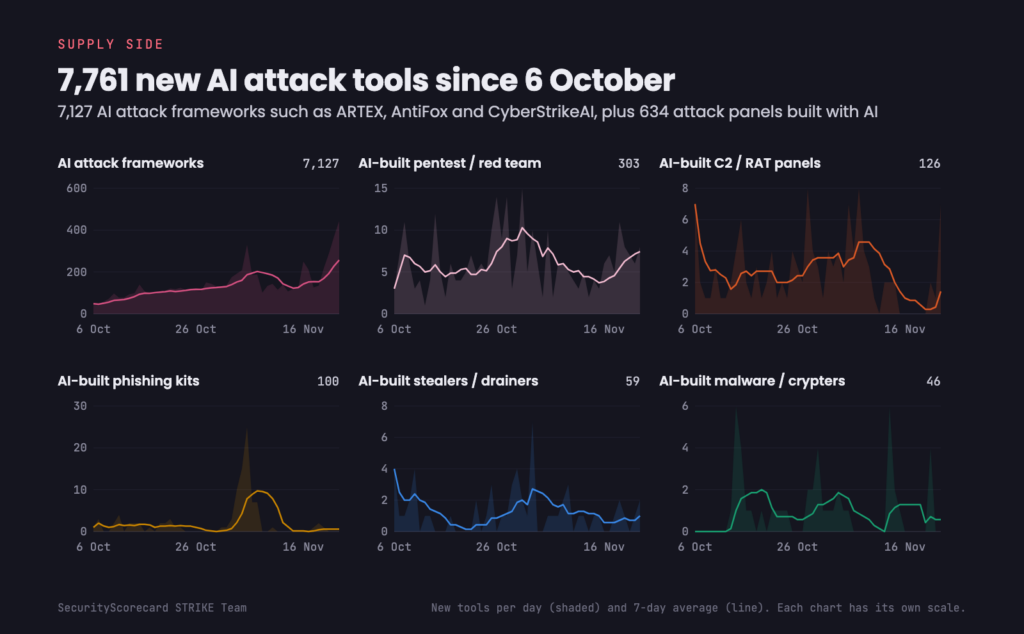
Figure 1: New AI attack tools per day, by type, October 6 to November 23
Supply and Demand: Our Approach
Most AI threat reporting in 2026 looks from the inside: model provider abuse logs, incident response cases, and underground forums. That view is valuable, but it says little about what is actually running on the internet, or how AI-driven attackers behave when nobody has told them they are being watched.
This report looks from the outside, using two data sets that are normally studied separately:
- Supply: internet-wide scanning of attack infrastructure, including AI-built tools and AI agent frameworks.
- Demand: a network of AI decoys that records what visitors do when they find what looks like a real AI system.
Part 1. Supply: Attack Tools on the Open Internet
Between October 6 and November 23 2026, the SecurityScorecard STRIKE Team found 7,761 new AI attack tools on the open internet, from criminal panels to dual-use pentest frameworks. 7,127 are servers running AI attack frameworks, matched by each framework’s own console page. The other 634 are panels for C2, stealers, phishing, crypters, and pentesting on 292 IP addresses. We count a panel as AI-built when its page shows the marks of AI coding tools, such as its title style or describing itself as AI. Each tool is counted once, on the day it first appeared.
New AI attack tools, by week and type
| Week | AI frameworks | Pentest / red team | C2 / RAT / botnet | Phishing kit | Stealer / drainer | Crypter | Total |
| Oct. 6–12 | 475 | 35 | 16 | 10 | 13 | 0 | 549 |
| Oct. 13–19 | 725 | 37 | 19 | 9 | 2 | 14 | 806 |
| Oct. 20–26 | 819 | 52 | 17 | 7 | 6 | 4 | 905 |
| Oct. 27 – Nov. 2 | 977 | 63 | 25 | 5 | 19 | 11 | 1,100 |
| Nov. 3–9 | 1,340 | 37 | 32 | 64 | 8 | 4 | 1,485 |
| Nov. 10–16 | 996 | 27 | 7 | 1 | 4 | 9 | 1,044 |
| Nov. 17–23 | 1,795 | 52 | 10 | 4 | 7 | 4 | 1,872 |
What stands out
- Evilginx, a toolkit that steals login sessions to get around multi-factor authentication, dominates phishing infrastructure. We saw 1,876 Evilginx pages on 75 IP addresses. During the week of November 2 alone, 47 new Evilginx control dashboards appeared, almost all on two servers, each under its own hostname.
- One server at a Dutch hosting provider shows a crypto-drainer test page (“Drainer V3 test”) under more than 1,000 hostnames since November 16. It is a developer’s test build: its button reads “Sign & drain,” and the rest of its text is in Tunisian Arabic written in Latin letters.
- AI attack frameworks are by far the largest group: 7,127 of the 7,761 tools. Many are pentest tools that security teams also run, so like the 303 other pentest panels they are dual use.
- Cloudflare fronts 192 of the 634 AI-built panels, followed by Contabo, Amazon, and Hetzner. By hosting country: U.S. 51%, Germany 14%, and France 9%.
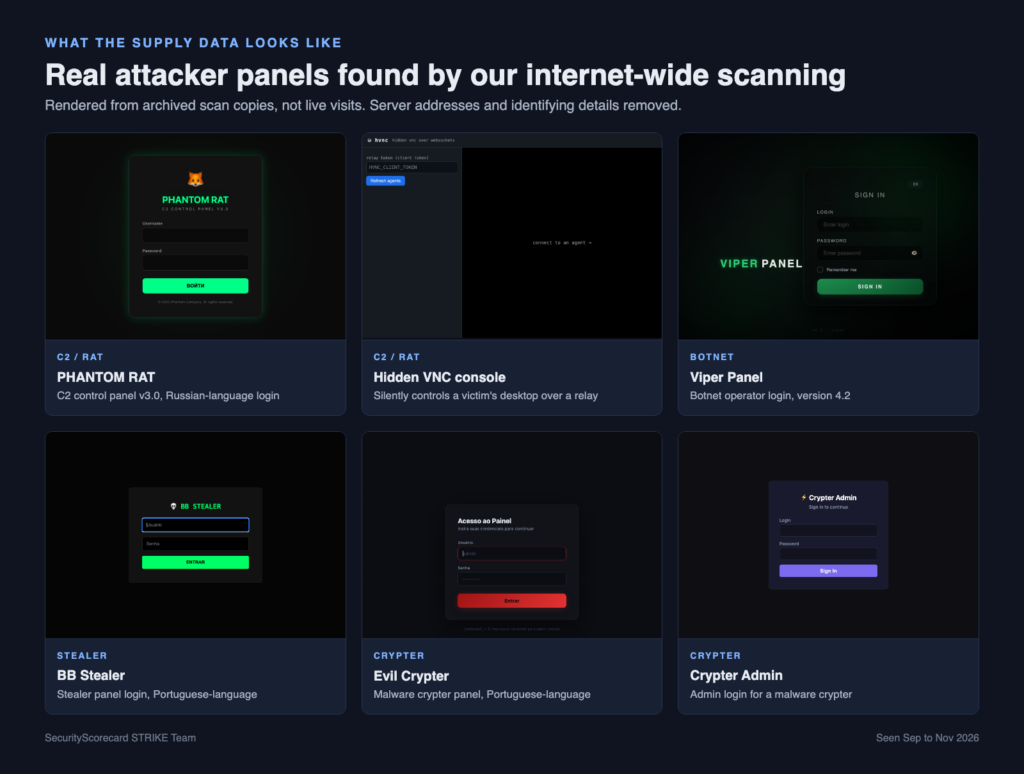
Figure 2: Attacker panels from our internet scans
Exposed AI attack frameworks, 60 days to November 23
This table counts every server running each framework in the 60 days to November 23. Figure 1 counts only servers that appeared for the first time from October 6, so its numbers are lower.
| Framework | Exposed servers (IPs) | Note |
| HexStrike AI | 5 | MCP-based, 150+ tools, named by Google Threat Intelligence Group (GTIG). |
| ARTEX | 3,783 (3,204 seen in November) | AI pentest tool named in the FBI alert of November 13. Default port 8787. Hosted mostly in the U.S., Hong Kong, China, and Singapore. See the ARTEX section below. |
| AntiFox | 1,332 | Public fork of ARTEX. Mostly on port 443, on Tencent and Alibaba cloud. Nine in 10 servers were seen for one week only. |
| PentAGI | 1,475 (1,095 seen in November) | Open-source AI pentest agent. Default port 8443. Hosted mostly in the U.S., China, and Lithuania. Dual use. |
| CyberStrikeAI | 2,598 (1,677 seen in November) | Open-source AI pentest platform of Chinese origin. Mostly on port 8080. Hosted mostly in the U.S., Hong Kong, and China. Dual use. |
| Cairn | 220 | Open-source AI pentest agent that security vendors have reported in real attacks since August. Mostly on port 8000. |
| Strix | 68 | Open-source AI agents for testing web apps. Mostly on port 8080. Dual use. |
| RedAmon | 50 | Open-source AI pipeline from reconnaissance to exploitation. Mostly on port 3000. Dual use. |
| Xalgorix | 51 | Open-source AI pentest agent. Mostly on port 9137. Dual use. |
| XuanMu RedTeam Agent | 16 | Open-source red team multi-agent tool from a Chinese team. Mostly on port 8000, hosted in Hong Kong, the U.S., and China. |
| Others | 34 | CyberStrike (21), Decepticon (9), and BugTraceAI (4). |
ARTEX: the FBI warning, seen from outside
On November 13, the FBI warned about ARTEX (FLASH-20261113-001), an open-source AI “autonomous pentest” tool that criminals and China-linked groups have used since August, in some cases reaching admin access in less than three hours. ARTEX has no model of its own. It plugs into outside models such as Claude, GPT, and, most often, DeepSeek. The developer removed the code from GitHub on October 8, but copies, forks, and a paid “ARTEX PRO” remain.
What our scans show
- 3,783 servers ran an exposed ARTEX console in the last 60 days, and 3,204 of them were seen in November. The FBI cites more than 1,600.
- Taking the code off GitHub did not slow it down. Exposed consoles per two-week window grew from 562 (the window that includes October 8) to 2,794 in the two weeks to November 23, about five times as many (Figure 4).
- 93% run the Chinese-language build, most on the default port 8787, hosted mainly in the U.S., Hong Kong, China, and Singapore. We also see Korean, Russian, and Portuguese builds and modified versions, including “ARTEX-PRO,” a proxy-pool add-on and an email console.
- Not every ARTEX console says ARTEX. Another 29 servers run a copy titled “Autonomous Pentest Agent.” Its page code matches ARTEX line for line, with the name removed, so any count by name, ours included, is a minimum.
- ARTEX forks are built to be thrown away. AntiFox, a public fork of ARTEX, first appeared in our scans on October 8 and has since run on 1,332 servers, 872 of them in the week to November 23 alone. Nine in 10 were seen for a single week, most set up the same way on fresh Tencent or Alibaba cloud servers.
- Two IP addresses listed in the FBI alert appear in our scans running an ARTEX console, an independent check on the FBI indicators.
- Some operators put their own password gate in front of the console. One modified build sends all of the agent’s traffic through rotating residential proxies set to South Korea, and switches node automatically when blocked (Figure 3).
- ARTEX servers came to our AI decoys. Three IP addresses that hosted ARTEX consoles also probed our decoy Ollama servers on November 6, 14, and 18. One listed the available models and sent short test prompts to large 70B models. This fits the FBI’s observation that ARTEX depends on outside models, and exposed models are the cheapest supply.
- Others are already setting traps: we found pages built to catch ARTEX agents, including one whose title tells an AI agent to fetch a tracking link.
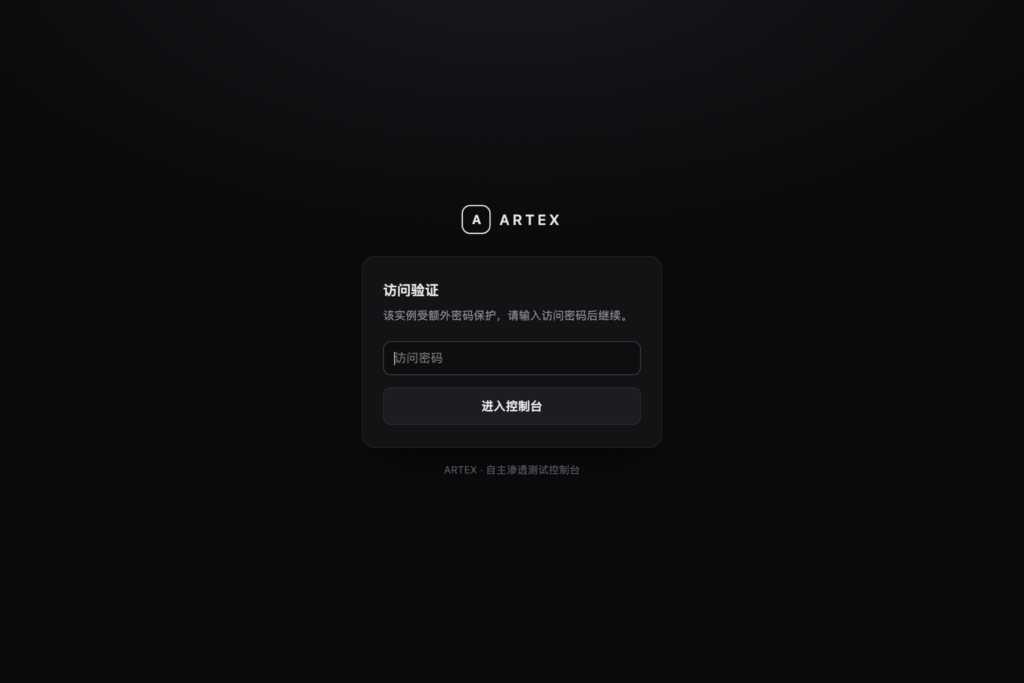
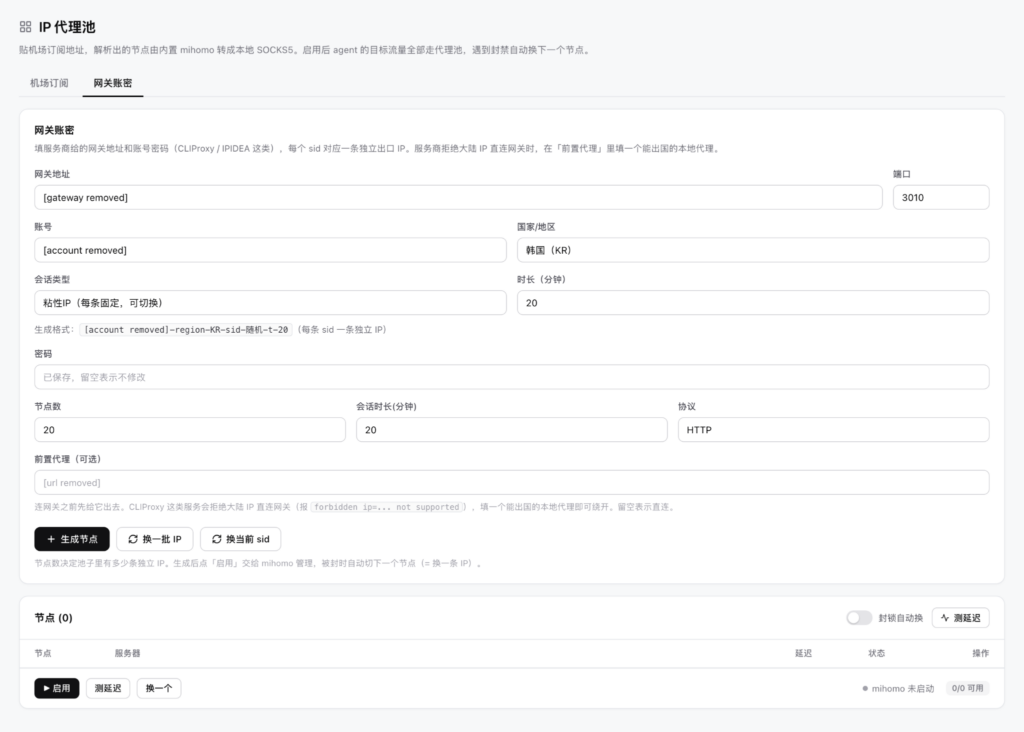
Figure 3: Two modified ARTEX consoles: an added password gate (left) and a rotating proxy pool (right)
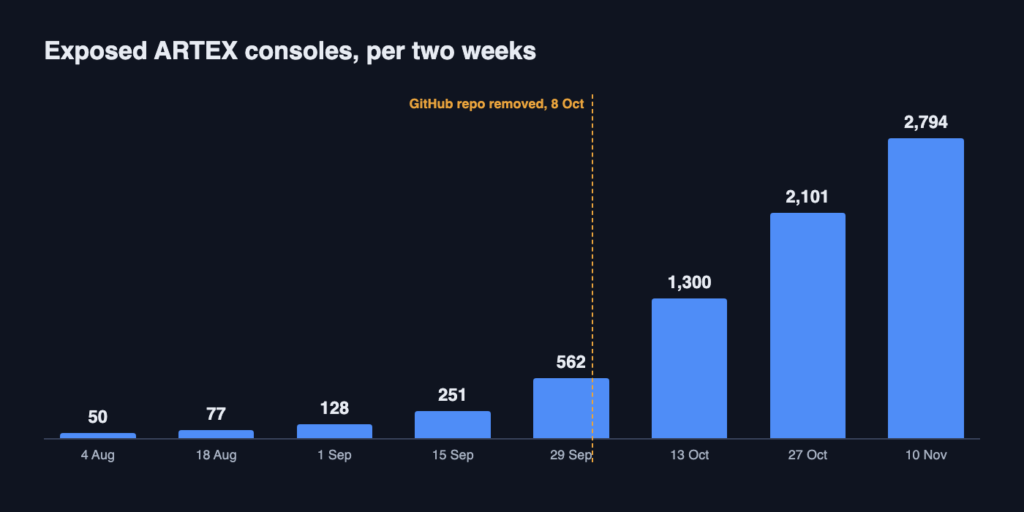
Figure 4: Exposed ARTEX consoles per two-week window, before and after the October 8 GitHub takedown.
A pentest tool rebuilt as a crime workbench. Most CyberStrikeAI installs look like the stock open-source tool. One we found (v1.7.5, Chinese build) adds menus for residential proxies, SMS verification numbers, CAPTCHA solving, Google and Outlook mailboxes, “card sites” (carding shops), WordPress vulnerability hits, a list of “shells taken,” and a C2 with “traffic disguise.” It also links to PentAGI as its AI terminal. It shows how easily a red team tool can be rebuilt for crime (Figure 5).
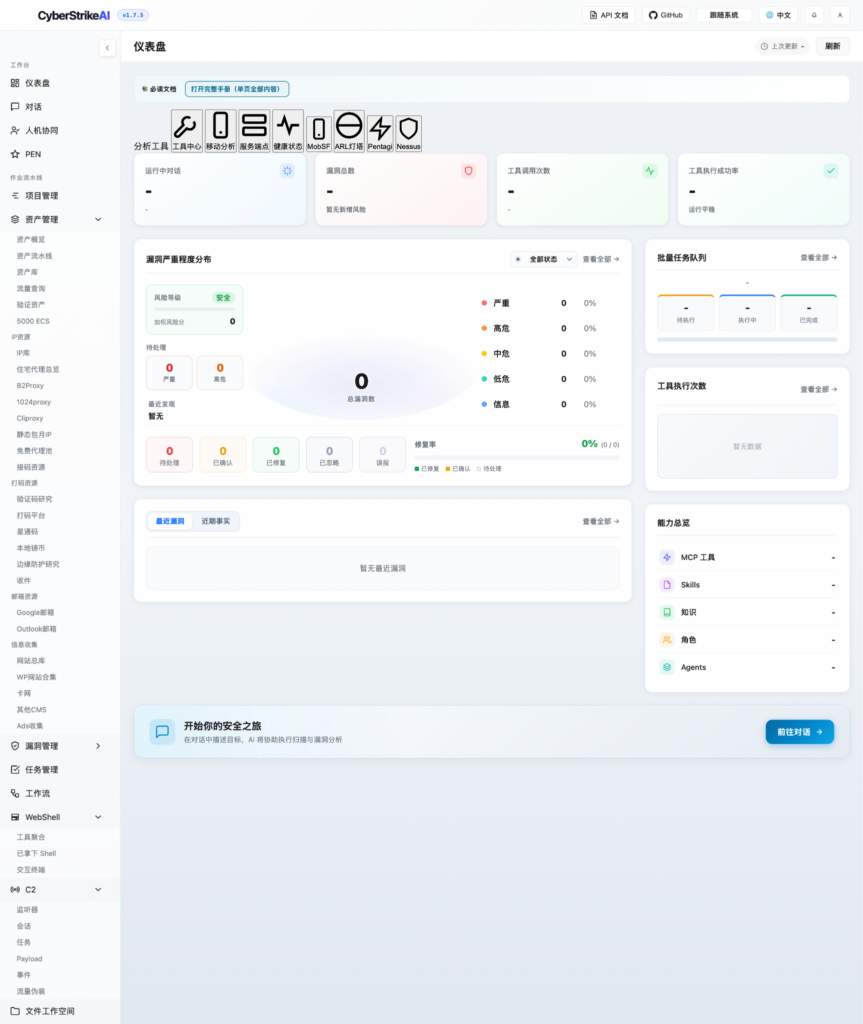
Figure 5: Menu of a CyberStrikeAI install rebuilt with carding, proxy and C2 tools (in Chinese)
Part 2. Demand: What We Saw on Our AI Decoys
Between September 7 and November 23, 2026, our AI decoys received 47,548 requests from 1,928 IP addresses in 215 networks and 55 countries.
Limits of this data: decoys only record visitors who find them and choose to engage, and some scanners check whether a server is real before using it. The figures below describe activity on our decoys and are a lower bound.
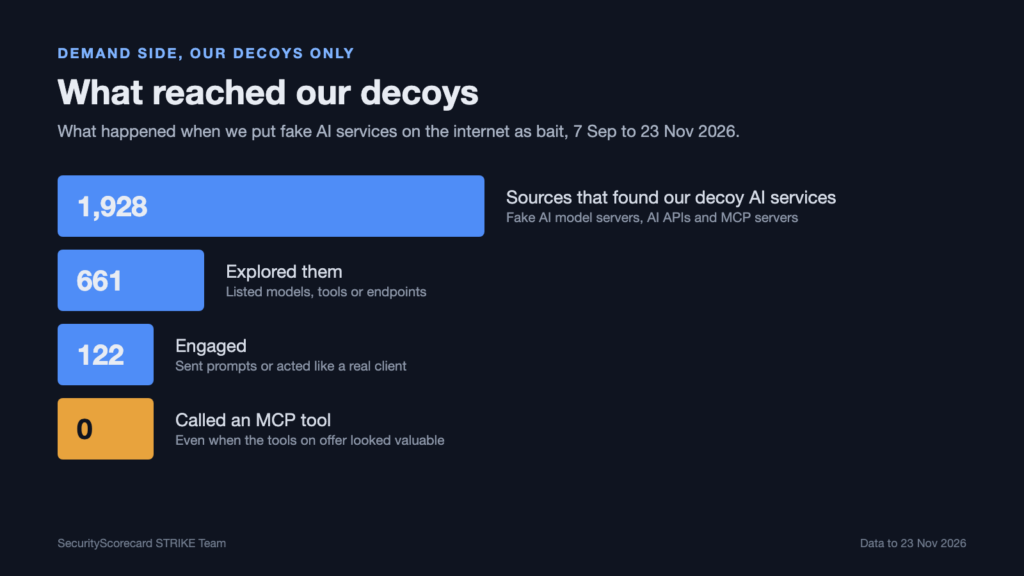
Figure 6: What happened when we put fake AI services online
2.1 MCP: mostly scanners in our data
- 79 IPs completed the MCP handshake, and almost all of them then asked for the tool list and the resource list. By the client names they sent, 70 of those IPs were Censys, and 7 were “internet-census-mcp-scanner”; the other two were small tools such as “llamascan.” We have not yet seen an AI agent connect over MCP to do a job.
- None called a tool, even though the tools offered looked valuable.
- What it means: MCP traffic on our decoys is inventory building, mapping what is exposed. Agents that do act may also be selective and avoid servers they do not know.
2.2 Testing the goods: benchmarks against free models
- The most common prompts are simple test tasks sent to large model names: “Write a Python function named add that takes two arguments and returns their sum. Reply with only the code” against llama-3.1-70b, qwen2.5-72b, and mixtral-8x7b.
- One tool, identifying itself as “oh-llama/1.0,” sent 145 such requests. Others send two-part questions designed to check that a real, capable model answers.
- What it means: operators are checking whether a free endpoint is real and good enough to use or resell. This matches the “LLM mixer” market Google describes, seen from the supply end.
2.3 Free frontier models through
- Ollama can forward requests for “cloud” models to Ollama’s hosted service, billed to the server owner’s account. An exposed, signed-in Ollama server therefore hands attackers free frontier models.
- Between October 19 and November 22, 10 IPs asked our decoy for 12 different cloud models (109 requests), most often deepseek-v4.1-flash:cloud and glm-5.3:cloud.
- Six of the 10 IPs are in India, and at least two appear to belong to one operator (same client library and the same weekly routine of pulling glm-5.3:cloud).
- Prompts are short liveness checks (“reply PONG,” “reverse this word”), which suggests automated checking before resale or use.
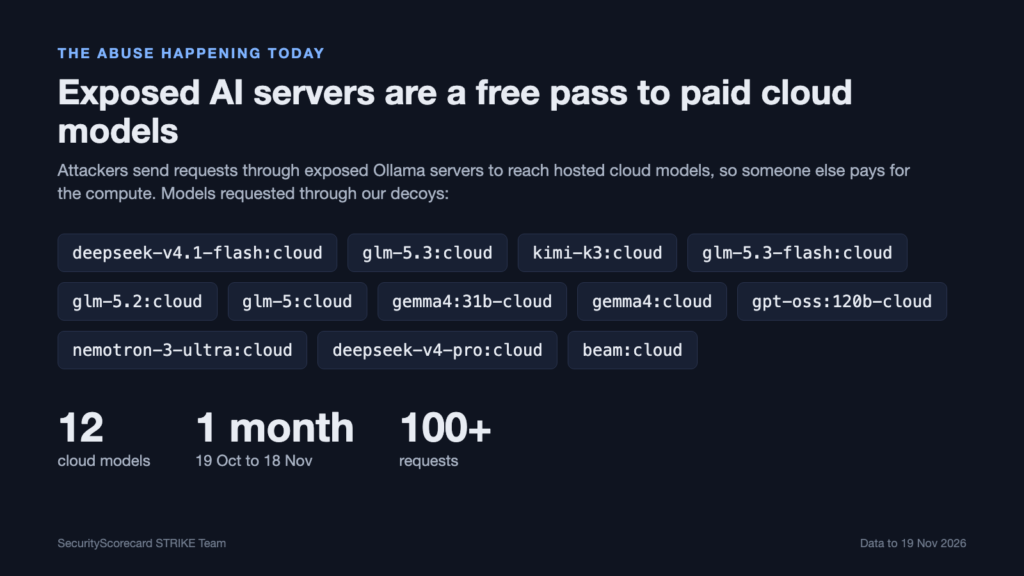
Figure 7: The 12 cloud models attackers requested through our decoy Ollama servers, October 19 to November 22
2.4 Checking whether a service is real
Some scanners now test whether an AI server is genuine before using it; for example, by requesting a model that cannot exist, or by announcing themselves as “checker” tools.
2.5 Scanners dressed as AI crawlers
Between September 7 and 15, 15 servers on one Google Cloud network sent 13,852 requests to our decoys. Each server rotated through 13 user-agent names that belong to AI companies’ crawlers and assistants: Claude-User, ClaudeBot, and Claude-SearchBot (Anthropic), ChatGPT-User, GPTBot, and OAI-SearchBot (OpenAI), Perplexity-User and PerplexityBot, Amazonbot, Meta-ExternalAgent, Bytespider (ByteDance), Google-Extended, and a “GrokBot” name. Together they account for 99.9% of the requests to our decoys that carried an AI company’s bot name.
No real crawler claims to belong to eight companies at once, and the requests looked nothing like AI crawling. About half asked for secret and configuration files such as .env and /proc/self/environ (through the Vite file-read flaw), and many others probed URL-fetching endpoints such as /fetch and /proxy, a common route to server-side request forgery.
What it means: the AI name is a disguise, most likely because many sites and firewalls now let AI crawlers through. A request that names an AI company should be checked against that company’s published IP ranges before it is trusted.
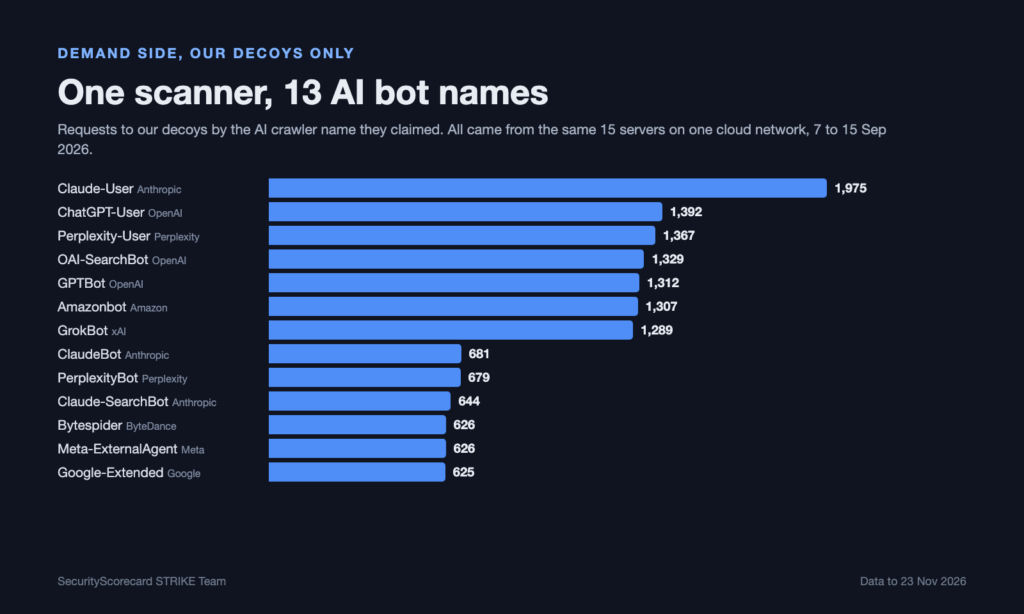
Figure 8: Requests by claimed AI crawler name, all from the same 15 servers, September 7 to 15
2.6 What attackers typed: prompt examples
We collected 455 different prompts sent to our decoy models between October 10 and November 19. Among them we found no jailbreaks and no prompt-injection attempts. No one tried to make a model ignore its instructions, reveal its system prompt, or write anything harmful. Almost every prompt is a test, and the tests show what the operators want.
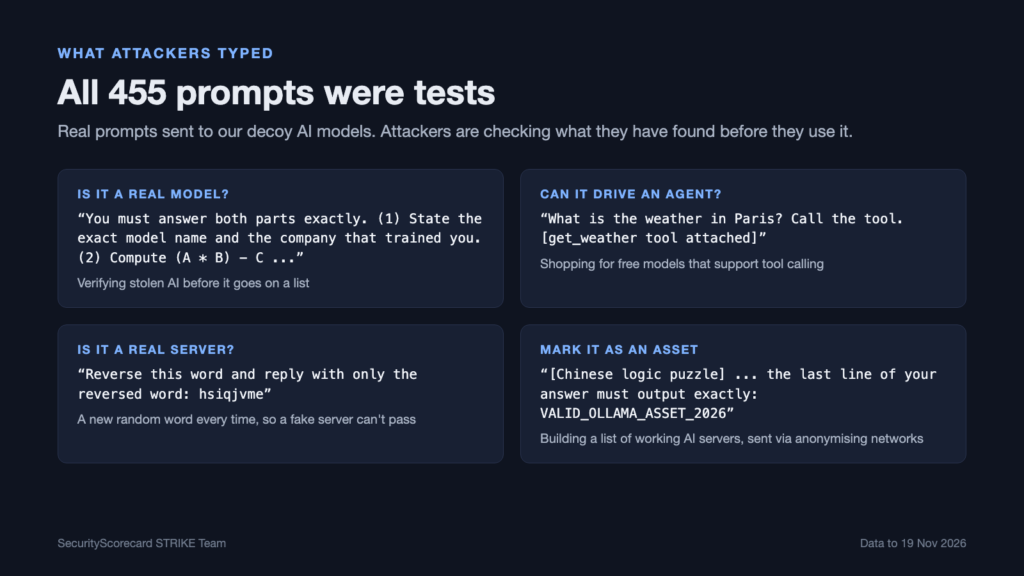
Figure 9: Four of the 455 prompts sent to our decoy models, and what each one checks
- Prove you are a real model, and say which one. (tool “scanner-go/1”): “You must answer both parts exactly. (1) In one short sentence, state the exact model name and the company that trained you. (2) Compute (A * B) – C where A=767, B=536, C=4922. Give only the final integer. Format: IDENTITY: <…> | ANSWER: <integer>“. What it means: the sender checks that the endpoint runs a real model, and which one, before it goes on a list.
- A stamp for an asset list. (in Chinese): a chickens-and-rabbits logic puzzle that ends “the last line of your answer must output exactly: VALID_OLLAMA_ASSET_2026.” Sent mostly from a Hong Kong VPS and also through Tor. What it means: someone is building a list of working Ollama servers and hiding who is doing it.
- Answers that cannot be faked. “Reverse this word and reply with only the reversed word: hsiqjvme,” with a new random word each time. A more rare version: “Start with the token b4k. It contains exactly one digit. 1. Reverse the whole token. 2. Increase that digit by 3. 3. Uppercase every letter.” What it means: with a new random input each time, only a live model can answer correctly, so a fake or cached server fails.
- Can it drive an agent? (tool “vllm-scanner/0.1.0”): “What is the weather in Paris? Call the tool,” sent with a get_weather function attached. What it means: the first scanner we have seen checking whether a free model supports tool calling, the feature an attack agent needs.
- Is it good enough to use or resell? (tool “oh-llama/1.0”): “Write a Python function named add that takes two arguments and returns their sum. Reply with only the code,” sent to 70B-class model names. Others ask for code that prints the first 10 Fibonacci numbers or an ASCII house. What it means: quality scoring of free models.
- Is it alive? “hi,” “ping,” “Reply with exactly: ALIVE,” “reply PONG,” “What is 17*23? Number only,” and the Chinese “9162-4863=? answer with the number only.” Tool names include OllamaNoKeyCheck/1.0, ollama-fullcheck/1.0, and ApiHunt/1.0.
- Ordinary exploits. Generic exploit payloads sprayed at the AI port: React2Shell (CVE-2025-55182), Vite file read (CVE-2025-30208), the Langflow login bypass (CVE-2026-9198, which targets an AI app builder), aiohttp path traversal (CVE-2024-23334), older Apache, Citrix, and VMware exploits, XML external entity (XXE) injection aimed at the cloud metadata address 169.254.169.254, SQL injection, PHP code injection, and VMware vSphere probes. What it means: AI servers are now part of the general exploit spray.
Part 3. What It Means
- Capability looks ahead of what reaches us. The tools for agentic attacks are deployed in their thousands, and the FBI has documented ARTEX intrusions that reached admin access in less than three hours. The visitors to our AI decoys, though, behaved like scanners and resellers. Two explanations fit: opportunistic agent activity is still rare, or capable agents avoid or detect decoys like ours. The intrusions the FBI describes were aimed at chosen victims, which fits either.
- The near-term money is in selling AI access. Free model access (exposed Ollama, OpenAI-compatible endpoints, cloud model passthrough) is being found, tested, and used today. Agent tools such as ARTEX need a model to run, and free exposed models are the cheapest supply. Servers hosting ARTEX were among those testing our decoys. Three IP addresses linked to this autumn’s breaches of AI developer platforms ran “New API,” software used to resell AI model access, and one also ran a customer balance page.
- When agents do act, it will be fast. The inventory is already built: who exposes MCP servers, which tools they offer, which endpoints answer. Google’s AI Threat Tracker and the FBI both describe agentic intrusions at machine speed. The inventory we see being built is where those agents will start.
- Dual-use tools blur the line. The same frameworks red teams use are rebuilt for crime, and from outside the difference often shows only in what operators add, such as proxy pools, password gates, and carding menus.
Recommendations
- Do not expose Ollama, OpenAI-compatible model servers, or MCP servers to the internet without authentication. Treat them like databases.
- The STRIKE team also tracks exposed OpenClaw agents live at declawed.io/live.
- If you run Ollama, sign out of ollama.com on any server that is reachable from outside, or block cloud models; otherwise, strangers spend your quota.
- Give MCP tools the least access possible and log every tool call. A tool list request from an unknown client is an early warning.
- Watch for model-listing requests (/api/tags, /v1/models) from unknown IPs. They are the step right before abuse.
- Monitor cloud and AI spend for sudden spikes.
- Check any request that claims to be an AI crawler against that company’s published IP ranges or reverse DNS before allowing it through. In our data the name alone was almost always false.
- Watch for unexpected outbound calls from servers to AI model APIs (for example, api.anthropic.com, api.deepseek.com, open.bigmodel.cn, and api.x.ai) or to LLM resale services: on a server with no reason to use AI, they can mean an agent is running on it.
- Inventory and rate-limit peripheral systems such as partner portals, mobile backends, and old applications: they are what agentic tools find and attack first.
- Patch the exploits being sprayed at AI servers, including the Langflow login bypass (CVE-2026-9198) and React2Shell (CVE-2025-55182).
About SecurityScorecard
SecurityScorecard is the global leader in threat-informed third-party risk management (TPRM), securing the world’s supply chains. The company delivers a threat-informed approach to TPRM that enables organizations to drive out risk at the source. The platform uses continuous visibility and AI-accelerated workflows to help organizations reduce third-party risk before incidents occur and respond with confidence when they do.
Trusted by 3,000 organizations, including over 70% of the Fortune 100, and recognized as a trusted resource by the U.S. Cybersecurity and Infrastructure Security Agency (CISA). Backed by Evolution Equity Partners, Silver Lake Partners, Sequoia Capital, Google Ventures, and Riverwood Capital, SecurityScorecard delivers end-to-end supply chain cybersecurity that safeguards business continuity.
Learn more at securityscorecard.com.