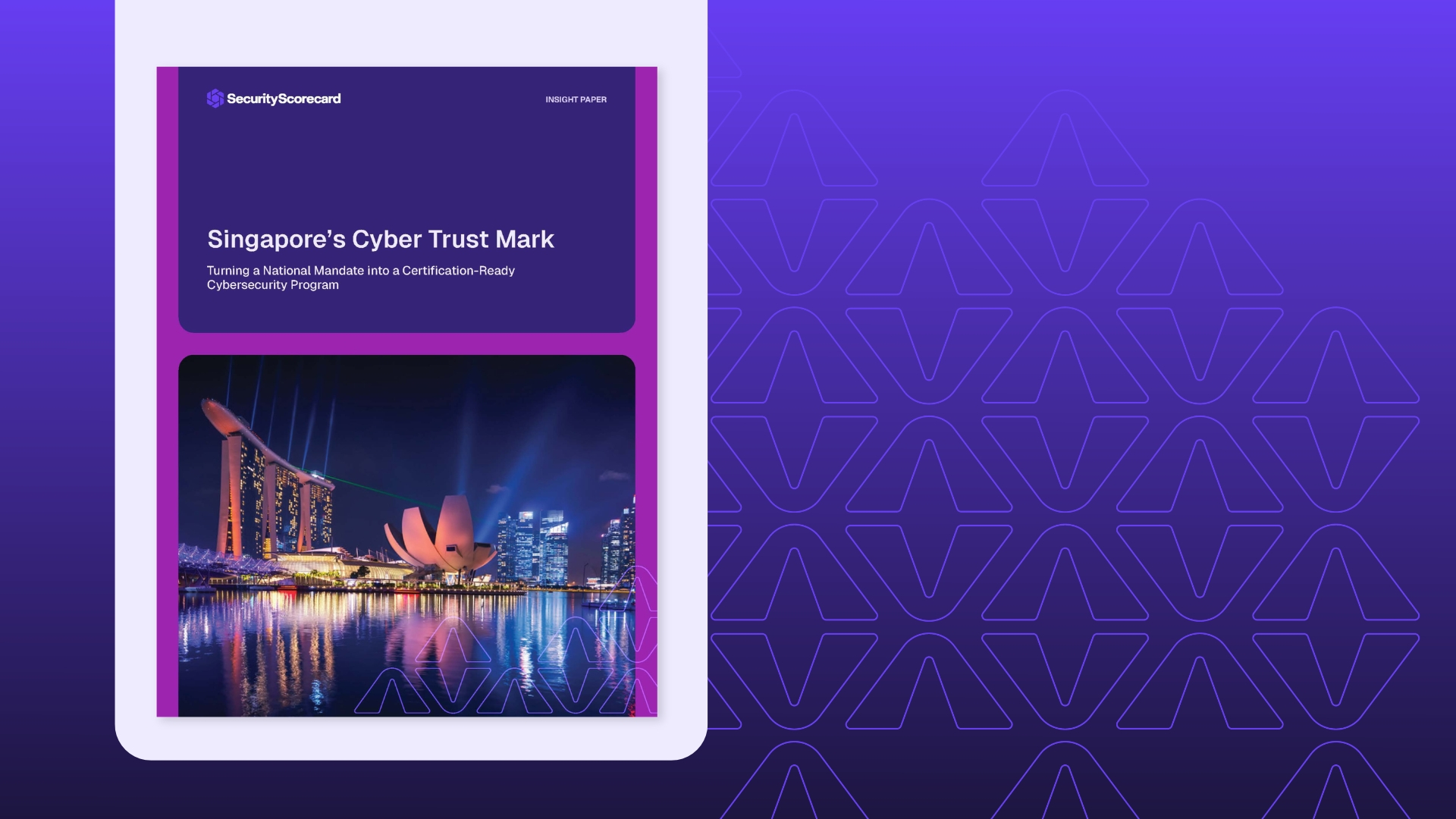
Singapore’s Cyber Trust Mark is no longer voluntary for many organizations. CSA has set fixed deadlines for Critical Information Infrastructure Owners, CII auditors and licensed cybersecurity providers, and GovTech will require Cyber Essentials and/or Cyber Trust by end-2027 for government vendors that handle critical systems or sensitive data. For everyone else, it is the direction procurement is heading.
This Strategic Insights Paper explains what the framework requires tier by tier, who must certify and by when, and how SecurityScorecard supplies outside-in evidence across the Cyber Trust domains. It also shows where internal controls still have to carry the load, so you can turn certification from a periodic scramble into an always-on state of readiness.
What you’ll learn
- What the refreshed Cyber Trust standard (SS 712:2025) requires across its five tiers, from supporter to advocate, and how it now extends to cloud, OT and AI
- Which organizations face mandatory deadlines, and which tier each must reach
- Which Cyber Trust domains external, continuous monitoring can evidence, and which stay internal
- How third-party risk expectations step up from T3 to T5
- A tiered path to readiness, plus practical next steps for your target tier
Who should read it: CISOs, security and risk leaders, and third-party risk and compliance teams in Singapore and across APAC. It is most relevant if you’re a CIIO, a CII auditor, or a licensed cybersecurity provider, or if you supply any of them or the Singapore government.