
Resources
Solution Guide
Resource Library

May 4, 2026
TITAN MAX Service
TITAN MAX inserts technology and expertise at every stage of the vendor lifecycle to drive TPRM outcomes.
April 29, 2026
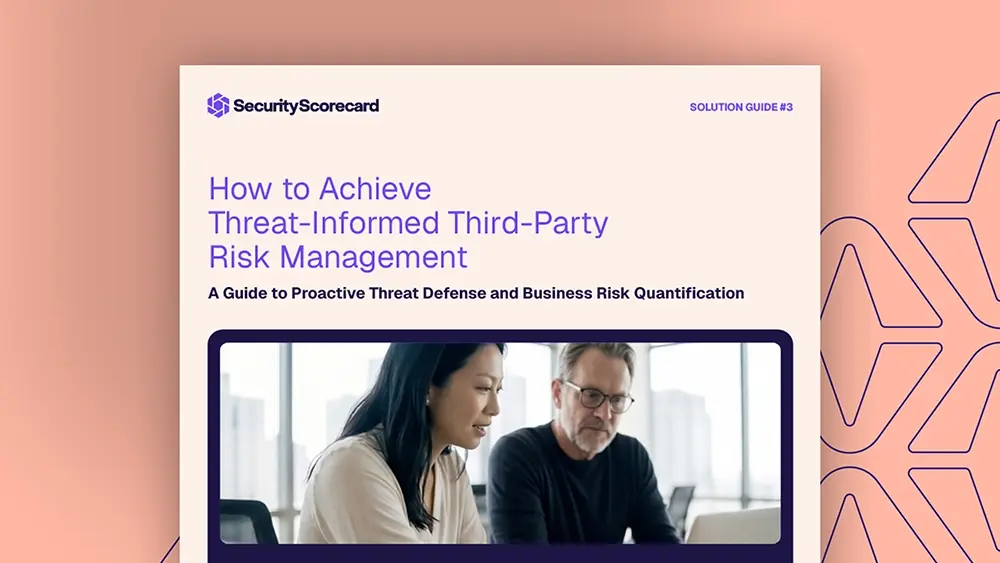
A Guide to Achieving Threat-Informed Third-Party Risk Management
This solution guide serves as the strategic roadmap for high-maturity organizations ready to evolve their Third-Party Risk Management (TPRM) program from an “always-on” monitoring function to a proactive, threat-informed defense engine. You will learn how to move beyond reacting to grade drops and gain the ability to act on finished intelligence that anticipates and stops attacks before they ever reach your network. This guide is essential for organizations aiming to unify security operations and transform supply chain risk into a quantified business metric.
This guide will breakdown:
The threat data silo: Discover how to unify your SOC and TPRM teams by contextualizing global threat intelligence with specific business risk data.
Prioritizing response via intelligence: Master the shift from chasing every alert to focusing exclusively on vulnerabilities currently being targeted by active threat actors.
Executing independent risk actions: Empower your team to restrict access or switch suppliers based on data, without waiting for a vendor to respond.
Quantifying exposure: Move from letter grades to financial risk and the Breach Susceptibility Index (BSI), translating technical risk into business impact language.
Operational authority: Institutionalize the mandate for TPRM to pull internal levers autonomously, ensuring business continuity by taking preventative action in hours, not weeks.
April 29, 2026
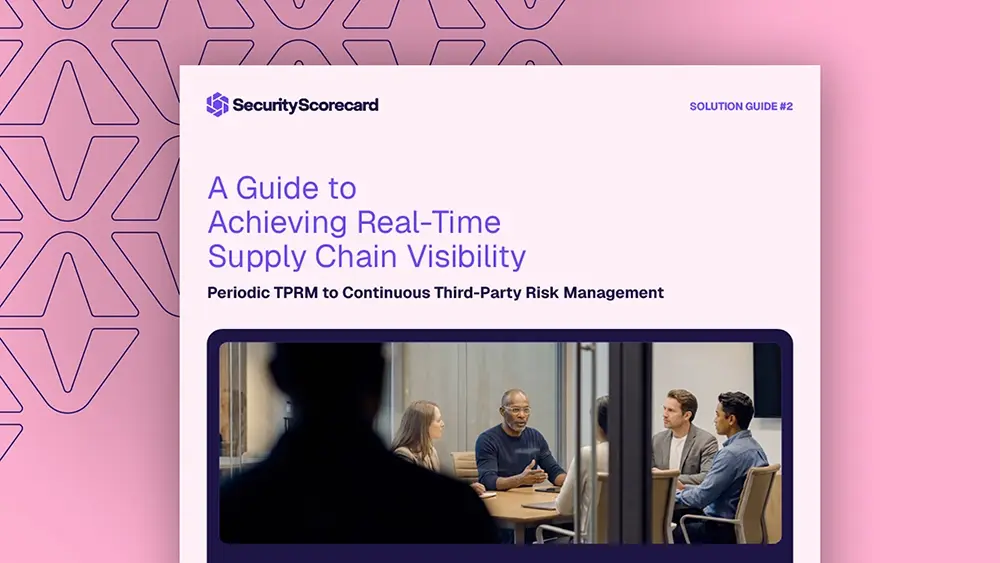
How to shift from Periodic to Continuous Third-Party Risk Management
This strategic roadmap shows mature organizations how to evolve their Third-Party Risk Management (TPRM) program from static, compliance-driven cycles to an active, always-on security function. Learn how to eliminate the critical “visibility gap” that leaves you blind to emerging risks between annual reviews, moving your team from a reactive, point-in-time defense to a proactive, resilient security posture.
Inside this solutions guide we have outlined:
How to eliminate the critical “blind spot” caused by annual assessments and achieve 365-day oversight of your entire vendor ecosystem.
A three-step framework for operationalizing a logic-based rules engine, allowing you to scale monitoring to thousands of vendors without increasing headcount.
The workflows and playbooks necessary to dramatically reduce your Mean Time to Respond (MTTR) to supply chain breaches from weeks to minutes.
April 15, 2026
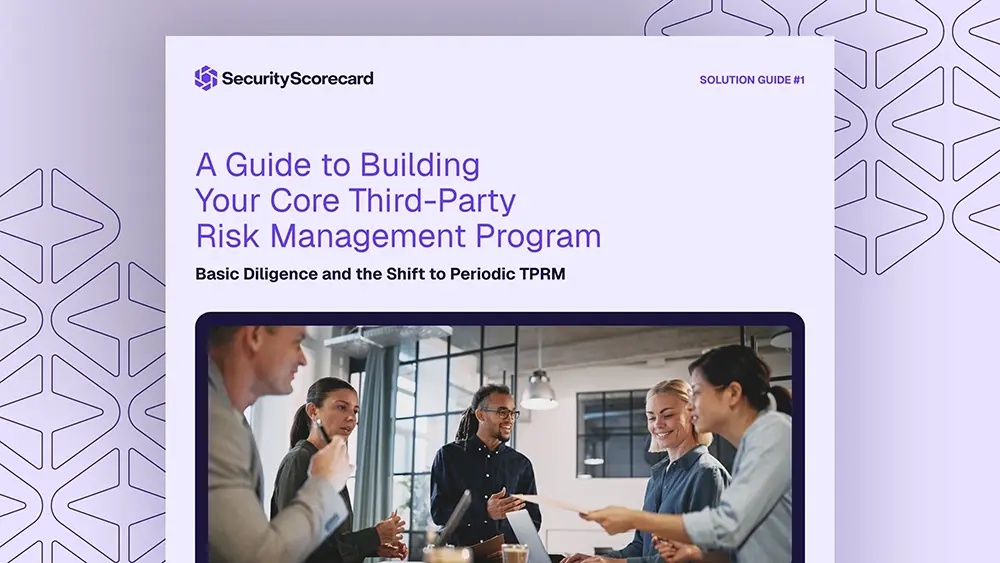
A Guide to Building Your Core Third-Party Risk Management Program
This guide is your blueprint that helps organizations move from manual spreadsheets and ad-hoc security checks to policy-driven Third-Party Risk Management (TPRM). Learn about the core practices of Basic Diligence and how to transition to a scalable Periodic TPRM program.
Inside, you will master the three essential steps to building a repeatable and scalable program:
Formalize Risk Governance: Establish a policy-driven program and an audit-ready system of record, ensuring continuous compliance and liability protection.
Implement Risk-Based Tiering: Strategically categorize vendors to focus high-value technical staff on critical partners, preventing low-risk ‘noise’ from clogging your pipeline.
Standardize the Assessment Workflow: Implement structured digital workflows to replace manual follow-ups, achieving a standard 2-week assessment cycle time and eliminating backlogs
Download the solution guide to learn about the core practices to achieve audit-readiness and operational scale without increasing headcount.
April 14, 2026
Una Guía para Construir su Programa Principal de Gestión de Riesgos de Terceros
Esta guía es su modelo de referencia que ayuda a las organizaciones a pasar de hojas de cálculo manuales y controles de seguridad ad hoc a una Gestión de Riesgos de Terceros (TPRM, por sus siglas en inglés) basada en políticas. Conozca las prácticas fundamentales de la Diligencia Básica y cómo realizar la transición hacia un programa TPRM Periódico y escalable.
En su interior, dominará los tres pasos esenciales para construir un programa repetible y escalable:
Formalizar la Gobernanza del Riesgo: Establezca un programa basado en políticas y un sistema de registro listo para auditorías, garantizando el cumplimiento continuo y la protección frente a responsabilidades.
Implementar la Categorización Basada en Riesgo: Clasifique estratégicamente a los proveedores para concentrar al personal técnico de alto valor en los socios críticos, evitando que el “ruido” de bajo riesgo obstruya su proceso.
Estandarizar el Flujo de Trabajo de Evaluación: Implemente flujos de trabajo digitales estructurados para reemplazar el seguimiento manual, logrando un ciclo de evaluación estándar de 2 semanas y eliminando los retrasos acumulados.
Descargue la guía de solución para conocer las prácticas fundamentales que permiten alcanzar la preparación para auditorías y la escala operativa sin aumentar el número de empleados.