
What is Threat Intelligence in Cybersecurity? A Comprehensive 2025 Overview
The cybersecurity landscape has dramatically shifted since 2024, with threat actors becoming increasingly sophisticated, leveraging advanced AI capabilities to orchestrate attacks. As we navigate 2025, proactive threat intelligence has become more critical than ever for organizations seeking to stay ahead of evolving cyber threats.
Organizations that embrace comprehensive threat intelligence programs consistently outperform those relying solely on reactive security measures. The difference isn’t just in their security posture—it’s in their ability to make informed, strategic decisions about cybersecurity investments and risk management.
But what is cyber threat intelligence, and how can it help organizations build more resilient defenses against today’s sophisticated threat actors? This comprehensive guide provides a threat intelligence definition, addresses these critical questions and explores the evolving landscape of cyber threat intelligence in 2025.
What is threat intelligence?
Threat intelligence, or cyber threat intelligence, represents one of modern cybersecurity’s most potent defensive strategies. At its core, threat intelligence is the systematic collection, analysis, and application of information about current and emerging security threats that could impact an organization’s digital assets.
Unlike traditional security approaches, which focus primarily on detecting and responding to incidents after they occur, threat intelligence enables organizations to understand the “who, what, when, where, why, and how” behind cyber threats. This contextual understanding transforms raw threat data into actionable insights that security teams can use to make informed decisions about their defensive strategies.
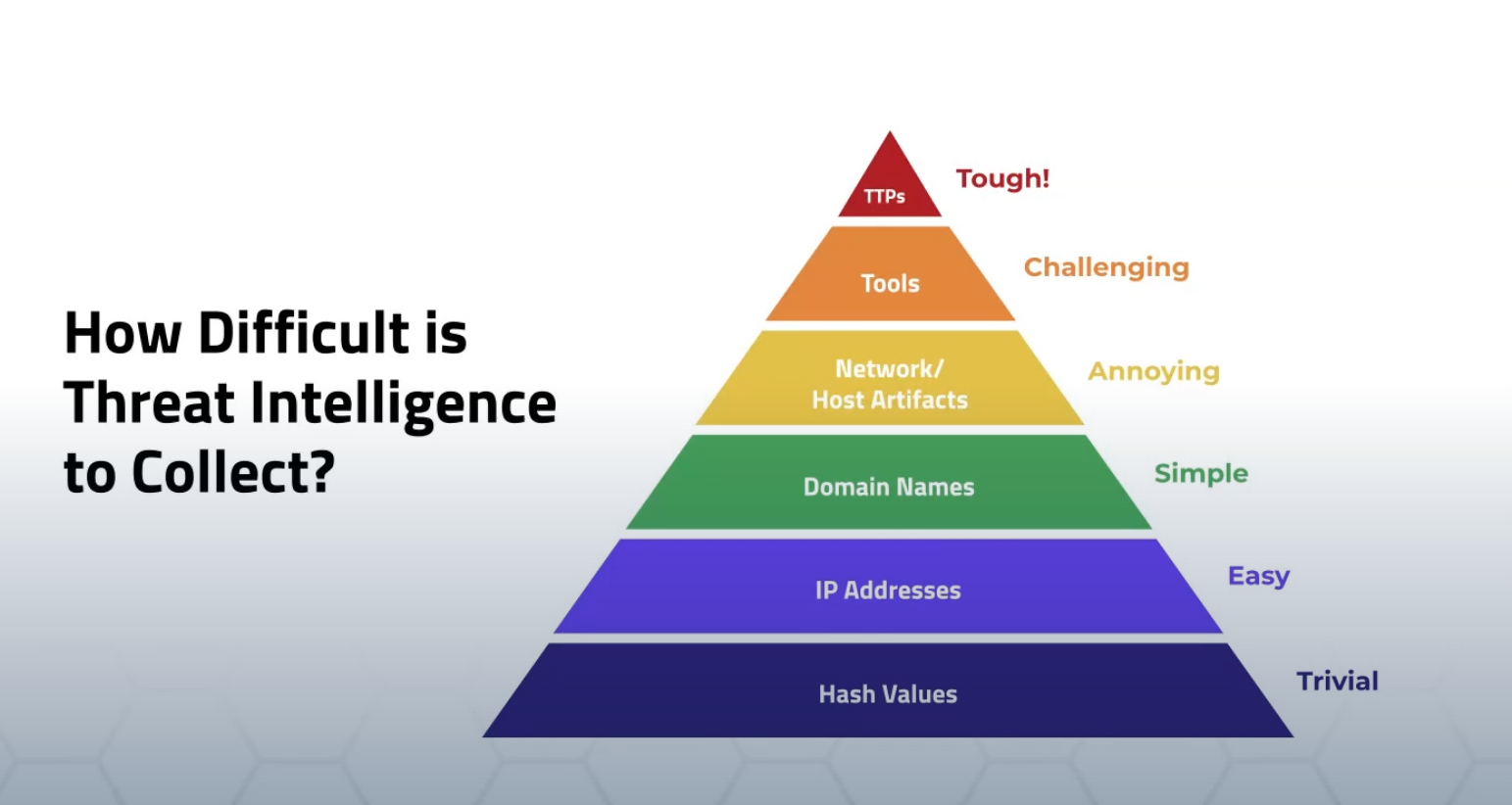
The objective of threat intelligence extends beyond simple threat detection. It provides the context necessary to understand threat actor motivations, their preferred tactics, techniques, and procedures (TTPs), and the specific vulnerabilities they’re likely to exploit. This intelligence enables organizations to predict potential attack vectors and implement preventive measures before breaches occur.
Threat data vs. threat intelligence
Before moving on, it’s worth discussing how threat data differs from threat intelligence. For a clearer explanation, we’ll use the analogy of weather forecasting. Threat data is like basic weather readings such as temperature, humidity, and barometric pressure from various sensors. While valuable, these isolated data points don’t tell you whether to carry an umbrella or cancel your outdoor event.
Threat intelligence is like a comprehensive weather forecast. It tells you that based on current atmospheric conditions, satellite imagery, and historical patterns, there’s an 80% chance of thunderstorms between 2 PM and 4 PM in your specific area, with potential for hail and strong winds. This actionable intelligence helps you make informed decisions about your plans and take appropriate precautions.
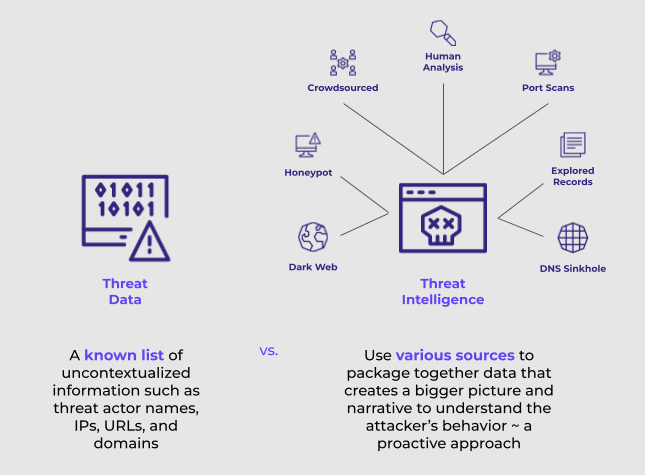
Threat intelligence is costly because it requires gathering different types of data, such as CVEs, malware infections, leaked credentials, and more, to understand a threat actor’s tactics, techniques, and procedures (TTPs).
This information comes from different sources, such as honeypots, sinkholes, port scans, and more. Context-rich threat intelligence correlates it for you, often curated by human cyber threat analysis. When you’re using high-quality and a variety of threat intelligence, you can proactively look for when a bully is out to get you and know in a matter of minutes how to protect yourself.
How does threat intelligence work?
Threat intelligence operates through a systematic process that transforms disparate security information into actionable insights. The process begins with comprehensive data collection from multiple sources—including open source intelligence (OSINT), proprietary threat feeds, dark web monitoring, honeypots, and internal security telemetry.
Once collected, this data undergoes rigorous cyber security threat analysis to identify patterns, correlations, and emerging trends. Advanced enterprise threat intelligence platforms use machine learning algorithms and human expertise to filter out false positives, identify new threat variants, and assess the credibility and relevance of different intelligence sources.
The real value of threat intelligence in cybersecurity emerges when this analyzed information is contextualized for specific organizations or industries. Effective threat intelligence answers critical questions: Which threat actors are likely to target your organization? What attack vectors are they using? What vulnerabilities are they exploiting? How can you adjust your defenses to counter these specific threats?
Modern threat intelligence systems also incorporate predictive capabilities. They use historical attack data and current threat actor behavior to forecast likely future attack scenarios. This predictive aspect enables organizations to implement proactive defenses rather than simply reacting to attacks after they occur.
What are the types of threat intelligence?
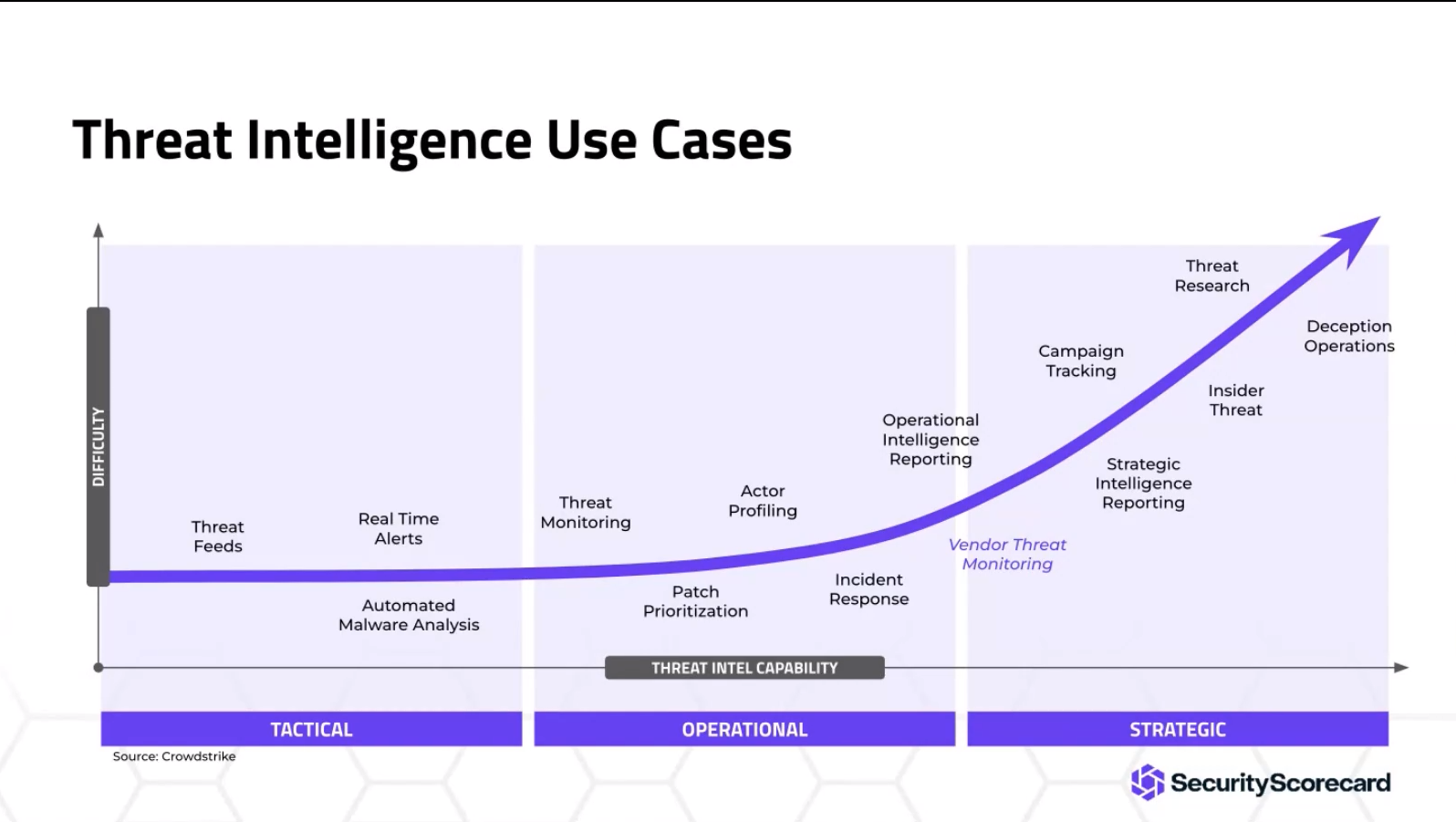
Understanding the different categories of threat intelligence is essential for building a comprehensive security strategy. Each type serves distinct purposes and audiences within an organization, from executive leadership to front-line security analysts.
1. Strategic threat intelligence
Strategic threat intelligence is high-level information on changing risks that isn’t too technical. It focuses on long-term, high-level insights into threat actors’ strategies and tactics. Using this information, executives and decision-makers can understand the wider landscape of threats to shape their organization’s cybersecurity strategy and align with business goals.
Also in this category is integrated threat intelligence. This is where vendor risk managers look at information coming from their third-party vendors, specifically focusing on threats that impact those vendors. This helps more proactively alert the tactical and operational teams to threats that could harm their organization.
2. Operational threat intelligence
This level tends to fall between strategic and tactical levels. Operational threat intelligence provides detailed insights relevant to ongoing cyber security operations, specific cyber threats, and how they operate. The information includes indicators of compromise (IOCs) and tactics, techniques, and procedures (TTPs) used by threat actors. It aids cybersecurity teams in preparing for, detecting, and responding to these threats. In addition, it enables the broader security team to strengthen defenses across people, processes, and/or technology.
3. Tactical threat intelligence
Tactical threat intelligence focuses on the here and now. It involves real-time information about immediate threats to an organization. Tactical intelligence helps front-line security teams understand and mitigate the latest cyber threats. This is also where system admins and the more technical teams — including security operations center (SOC) and incident response (IR) teams — use intelligence to make decisions on how to remediate cyber vulnerabilities.
What is the threat intelligence lifecycle?
The threat intelligence lifecycle provides a structured framework for transforming raw threat data into actionable intelligence. This iterative process ensures that intelligence efforts remain aligned with organizational needs and deliver measurable value to security operations.
1. Direction (or planning)
This first step involves defining the objectives and scope of the threat intelligence activity. What are the key assets that need to be protected? What are the main threats to these assets? The answers to these questions help set the direction for the subsequent stages of the lifecycle.
2. Collection
In this step, data is gathered from a variety of sources. These sources can include open source intelligence (OSINT), social media, deep and dark web, threat intelligence feeds, human intelligence (HUMINT), internal system logs, and more.
3. Processing
Once the data is collected, it is then processed. This involves cleaning the data, filtering out irrelevant information, and converting it into a format that can be easily analyzed. This step may also involve enrichment, which means adding context to the raw data to make it more useful.
4. Analysis
In this crucial step, the processed data is analyzed to identify patterns, trends, and anomalies that could indicate a potential threat. Analysts use various techniques, such as data mining, statistical analysis, and machine learning, to interpret the data and extract meaningful insights.
5. Production
After analysis, the results are then compiled into a threat intelligence report. This report provides a comprehensive overview of the identified threats, the assets they could potentially impact, and recommended countermeasures.
6. Dissemination
The threat intelligence report is then distributed to the relevant stakeholders within the organization. This could include IT teams, SOCs, executive leadership, and other parties who need to be aware of the threats and how to mitigate them.
7. Feedback/Review
The final step in the threat intelligence lifecycle is to gather feedback on the effectiveness of the threat intelligence provided and review and adjust the direction, collection, processing, and analysis methods as needed to improve future threat intelligence activities.
It’s important to note that this is a continuous process. As the cyber threat landscape evolves, the threat intelligence lifecycle continually repeats, constantly updating the organization’s understanding of threats and enhancing its ability to protect itself.
How is threat intelligence collected?
Threat intelligence collection has evolved into a sophisticated discipline that leverages multiple methodologies and technologies to gather comprehensive information about the global threat landscape. Understanding these collection methods is crucial for organizations seeking to build effective threat intelligence capabilities or evaluate potential intelligence providers.
SecurityScorecard’s comprehensive threat intelligence capabilities stem from massive infrastructure that includes sink scanners and sensors crawling the whole internet, vulnerability footprinting systems, and a team of threat researchers developing new signals through collecting emerging threats. All of this raw data flows into our attribution, research, and analysis system, which then breaks down findings by organization and further by risk factor.
Open Source Intelligence (OSINT)
OSINT represents one of the most accessible and valuable sources of threat intelligence. This includes information gathered from publicly available sources such as security research blogs, vulnerability databases, social media platforms, news articles, and academic publications.
Modern OSINT collection extends beyond simple web scraping to include sophisticated monitoring of hacker forums, social media sentiment analysis, and automated processing of security advisories from vendors and government agencies. Advanced practitioners use specialized tools to monitor paste sites, code repositories, and other platforms where threat actors might inadvertently expose information about their operations.
Dark web and deep web monitoring
The dark web has become a critical intelligence source as threat actors increasingly use encrypted networks to communicate, trade stolen data, and sell cybercriminal services. Specialized collection systems monitor dark web marketplaces, forums, and communication channels to identify emerging threats, understand threat actor capabilities, and track stolen organizational data.
This type of collection requires sophisticated technical capabilities and often involves human intelligence gathering from sources within criminal communities. The challenge lies in maintaining operational security while gathering intelligence from hostile environments.
Honeypots and deception technologies
Honeypots and deception technologies provide unique insights into threat actor behavior by creating attractive targets that lure attackers into controlled environments. These systems can capture attack methodologies, malware samples, and communication patterns while the attacks are in progress.
Modern honeypot deployments often simulate entire organizational networks, including realistic applications, databases, and user activity. The intelligence gathered from these systems provides invaluable insights into emerging attack techniques and threat actor targeting preferences.
Network telemetry and sensor networks
Large-scale sensor networks continuously monitor internet traffic to identify malicious activity, emerging attack patterns, and threat infrastructure. These systems process massive volumes of data to identify indicators of compromise, track malware distribution networks, and monitor the global threat landscape.
SecurityScorecard’s infrastructure, for example, includes “sink scanners and sensors crawling the whole internet, and vulnerability footprinting systems” that collect billions of data points daily. This comprehensive collection capability enables the identification of emerging threats and attack patterns that might be missed by more limited collection systems.
Commercial threat intelligence feeds
Organizations often supplement their internal collection capabilities with commercial threat intelligence feeds from specialized providers. These feeds provide access to intelligence gathered from sources that might be difficult or expensive for individual organizations to access independently.
The key to effective use of commercial feeds lies in selecting providers whose collection capabilities and analytical focus align with organizational threat landscapes and intelligence requirements.
What to look for in a threat intelligence solution?
Many large enterprises choose to build security solutions in-house to meet their specific business needs, while another popular approach is to layer multiple tools together to close any gaps that could lead to a data breach. But without a sufficiently rich perspective offered by external threat intelligence, these tools can be doomed from the start, especially when defending against newer threats.
To get the information about newer threats, you might need information from more seasoned security players with regular and constant analysis and access to updates regarding the global threat landscape.
- Search the entire IPv4 space
- Variety and quantity of sources
- Correlating threat actors to vulnerabilities
- Options for additional analysis
- Remediation recommendations
Watch our on-demand webinar “Threat Intelligence 101” to learn more about each step.
Cyber threat intelligence tools
Over the past few years, the cybersecurity landscape has seen explosive growth in threat intelligence tool sophistication and capability. Modern organizations now have access to a diverse ecosystem of tools, ranging from comprehensive threat intelligence platforms to specialized collection and analysis utilities.
Threat Intelligence Platforms (TIPs)
Comprehensive threat intelligence platforms serve as the central nervous system for organizational intelligence operations. These platforms integrate collection, processing, analysis, and dissemination capabilities into unified systems that can handle massive volumes of threat data.
Security Information and Event Management (SIEM) Integration
Modern SIEM systems increasingly incorporate threat intelligence capabilities, automatically correlating security events with external threat intelligence to provide enhanced context for security analysts. This integration enables organizations to move beyond simple signature-based detection to intelligence-driven security operations.
Automated malware analysis platforms
Sophisticated malware analysis platforms can automatically analyze suspicious files and URLs to extract indicators of compromise, understand malware capabilities, and identify connections to known threat campaigns. These platforms often include sandboxing capabilities that allow safe execution of malware samples in controlled environments.
Vulnerability intelligence tools
Specialized tools focus on collecting and analyzing vulnerability information from multiple sources, including vendor advisories, security research, and exploitation activity observed in the wild. These tools help organizations prioritize patch management efforts based on actual threat intelligence rather than simply relying on severity scores.
Best practices for implementing cyber security threat intelligence
Successfully implementing threat intelligence requires more than just purchasing tools or subscribing to intelligence feeds. It demands a strategic approach that aligns intelligence capabilities with organizational objectives and integrates intelligence processes into existing security operations.
Start with clear objectives and requirements
The foundation of any successful threat intelligence program lies in clearly defined objectives and intelligence requirements. Organizations must understand what they’re trying to protect, what threats they face, and how threat intelligence can help them make better security decisions.
Focus on relevant and actionable intelligence
One of the biggest challenges facing threat intelligence programs is information overload. With thousands of threat intelligence feeds and millions of indicators available, organizations must develop sophisticated filtering and prioritization mechanisms to focus on intelligence that’s relevant to their specific environment.
Integrate intelligence into security operations
Threat intelligence achieves maximum value when it’s integrated into day-to-day security operations rather than existing as a standalone function. This integration should encompass incident response procedures, vulnerability management processes, security tool configurations, and strategic planning activities.
Invest in analyst training and development
Effective threat intelligence requires skilled analysts who can interpret complex information, identify patterns across disparate data sources, and communicate findings to diverse audiences. Organizations must invest in developing these capabilities through training programs, industry certifications, and practical experience.
Establish information sharing relationships
No organization has complete visibility into the global threat landscape. Establishing relationships with industry peers, government agencies, and threat intelligence sharing communities can significantly enhance organizational intelligence capabilities.
Measure and continuously improve
Like any security program, threat intelligence initiatives must be regularly assessed and refined based on performance metrics and stakeholder feedback. Organizations should establish clear metrics for evaluating intelligence effectiveness, including measures of analytical accuracy, operational impact, and stakeholder satisfaction.
What are the benefits of threat intelligence?
The benefits of comprehensive threat intelligence extend far beyond traditional security operations, influencing strategic decision-making, operational efficiency, and organizational resilience across multiple domains.
Proactive defense
Threat intelligence enables organizations to shift from a reactive security posture to a proactive one. By understanding the potential threats, companies can implement measures to prevent attacks before they happen.
Informed decision-making
With detailed insights about the nature of threats, their potential impact, and the possible mitigation strategies, organizations can make well-informed decisions about allocating resources, investing in security tools, and planning their overall security strategy.
Improved incident response
Threat intelligence informs organizations about the nature of the threat, thus reducing response time in case of a breach. Knowing what you’re up against allows for quick, effective actions, minimizing the impact of an attack.
Risk management
By understanding the threat landscape, organizations can identify and prioritize the risks that pose the greatest danger. This information can guide the development of a robust risk management strategy.
Who benefits from threat intelligence?
The value of threat intelligence extends across organizational boundaries and impacts multiple stakeholder groups, each of whom benefits from different aspects of intelligence capabilities.
| Entity Type | Key Benefits | Specific Use Cases |
| Businesses and Organizations | Identify potential threats, understand adversary tactics, and implement preventative measures before attacks occur | Financial institutions protecting customer data, healthcare organizations securing patient records, and technology companies safeguarding intellectual property |
| Government Agencies | Protect internal data and critical infrastructure, gain insights into nation-state actors and terrorist groups planning cyberattacks | National defense systems, critical infrastructure protection, and citizen service platforms |
| Individuals | Access cybersecurity guidelines and advice based on threat intelligence to protect personal data | Personal data protection strategies, awareness of current scam techniques, and home network security |
| Non-Profit and NGOs | Safeguard sensitive information and maintain trust with donors and communities they serve | Protecting donor information, securing field operations data, and maintaining operational security in sensitive regions |
| Law Enforcement and Legal Entities | Stay proactive in investigations and frame legal arguments with current cyber threat landscape understanding | Cybercrime investigations, digital forensics support, and legal case preparation involving cyber incidents |
What is the future of threat intelligence?
The threat intelligence landscape continues to evolve rapidly, driven by technological advances, changing threat actor capabilities, and new approaches to cybersecurity defense.
Artificial Intelligence and machine learning integration
AI and machine learning technologies are increasingly central to threat intelligence operations. They enable organizations to process massive volumes of threat data and identify subtle patterns that might escape human detection.
However, the rise of AI also presents new challenges as threat actors begin incorporating these same technologies into their attack operations. The arms race between AI-powered defenses and AI-enhanced attacks will likely define much of the future threat landscape.
Increased focus on supply chain intelligence
The growing recognition of supply chain risks has led to increased focus on intelligence about third-party threats and vulnerabilities. Organizations are investing in capabilities to understand not just direct threats to their own environment, but threats that could impact their business partners and suppliers.
This trend is likely to accelerate as regulatory frameworks increasingly require organizations to demonstrate governance over their supply chain security.
Integration with cloud and hybrid environments
As organizations continue migrating to cloud and hybrid infrastructure, threat intelligence must evolve to provide visibility into these distributed environments. This includes understanding cloud-specific attack vectors, threats to containerized applications, and risks associated with multi-cloud deployments.
Enhanced automation and orchestration
The future of threat intelligence lies in increasingly automated systems that can collect, analyze, and act on intelligence with minimal human intervention. This automation will enable organizations to respond to threats at machine speed while freeing human analysts to focus on strategic analysis and complex investigations.
How to apply threat intelligence
To effectively apply threat intelligence, one must begin with a clear understanding of the organization’s assets and the potential risks associated with them. This can range from customer data and financial information to proprietary software. Knowing the importance of these assets and their vulnerabilities allows for a more targeted and efficient application of threat intelligence. Once key assets and risks are understood, organizations need to collect intelligence from reliable and relevant sources, which can include subscription-based feeds, open-source intelligence, industry groups, or even government agencies.
After the collection phase, the raw data needs to be meticulously analyzed for valuable insights. This can involve spotting patterns or trends, cross-referencing data from different sources, or assessing the credibility of an identified threat. Based on the analysis, it is then essential to implement protective measures to guard against the identified threats. These protective measures might include software updates, firewall improvements, staff training on recognizing phishing attempts, or modifying protocols for managing sensitive information.
In the evolving landscape of cyber threats, it’s crucial to share relevant intelligence with other entities in the network or industry, provided it is legally and ethically appropriate. Lastly, a continuous review and adaptation strategy should be in place to ensure the effectiveness of protective measures against the dynamic nature of cyber threats.
Enhance your cybersecurity posture with expert threat intelligence
The modern cybersecurity landscape demands more than reactive security measures. It requires intelligence driven approaches that enable organizations to understand, anticipate, and counter sophisticated threats. As we’ve explored throughout this guide, effective threat intelligence transforms raw security data into actionable insights that inform strategic decisions, enhance operational security, and improve organizational resilience.
SecurityScorecard provides comprehensive threat intelligence solutions that help organizations understand their unique risk profile and make informed security decisions. Our platform combines comprehensive data collection, expert analysis, and automated intelligence delivery to provide actionable insights that drive measurable security improvements.
From Supply Chain Risk Intelligence that monitors threats across your vendor ecosystem to Intelligence Feeds that pipe real time contextual data into your existing security tools, SecurityScorecard delivers the intelligence you need to stay ahead of evolving threats.
Whether you’re looking to enhance your existing threat intelligence capabilities or establish a new program, understanding your organization’s specific threat landscape is the first step toward building more effective defenses.
Ready to strengthen your threat intelligence program? Explore our comprehensive threat intelligence solutions or request a demo to see how SecurityScorecard can help you transform threat data into actionable security intelligence.