
Resources
Ebook
Resource Library

October 7, 2026
The TPRM Team’s Guide to Threat Intellignece
Third-party breaches rarely announce themselves through formal audit findings. They often start quietly: an exposed database, a forgotten subdomain, or stolen credentials surfacing on a dark web forum. By the time that vulnerability reaches your risk queue as a formal incident, the threat has been visible to anyone scanning the internet for weeks—possibly longer.
This is the structural flaw at the heart of traditional TPRM. Most programs run on questionnaires, point-in-time assessments, and compliance checklists—instruments designed to capture a vendor’s security posture on one specific day and assume it will remain stable until the next review cycle. But vendors don’t operate on assessment schedules. They stand up new infrastructure continuously, acquire other companies, and accumulate unpatched vulnerabilities on an ongoing basis. Attackers operate on the same continuous timeline, probing for exposure every single day.
The gap between what your last assessment documented and what is actually exposed on the internet right now is where vendor risk lives. Fortunately, closing that gap doesn’t require abandoning practices that work. It requires adding a single critical layer that most TPRM programs have historically lacked: continuous, internet-scale threat intelligence.
What’s in the guide
Why traditional TPRM assessments miss threats that are already visible on the open internet
The structural problem: retrospective instruments trying to manage continuous risk
What continuous, internet-scale threat intelligence is and how it differs from traditional vendor monitoring
Where this intelligence layer belongs in your TPRM program architecture
How TPRM and SOC teams can collaborate using shared threat data for faster incident response
Practical use cases: when internet-scale intelligence catches what audits miss
Integration patterns: adding this layer without replacing existing assessment workflows
Evaluating solutions: what to look for in threat intelligence providers and platforms
Building the business case for continuous threat intelligence investment
A roadmap for implementing internet-scale visibility in your vendor risk program

October 7, 2026
Threat-Informed Third-Party Risk Management (TPRM)
Traditional third-party risk management runs on static assessments, manual communication, and processing timelines measured in weeks. A vendor completes a questionnaire. Your team files it. Everyone waits until the next cycle—meanwhile, risk is changing constantly.
The real danger isn’t the information you have about your vendors—it’s the gap between what you last recorded and what is actually true right now. A new vulnerability drops. An acquisition reshapes the supply chain. An attacker finds an opening. Point-in-time assessments can’t see any of it. They leave you blind to what is happening across your vendor ecosystem at any given moment.
Threat-informed TPRM closes that gap. It unifies active cyber threat intelligence with third-party risk data to detect and respond to threats in real time—so your teams act on what is actually being exploited, not on what a form said months ago. This is the shift from reactive compliance to proactive, AI-powered intelligence: a program that anticipates and neutralizes threats before they reach your network.
What’s in the guide
Why point-in-time assessments create dangerous blind spots across your vendor ecosystem
How threat-informed TPRM differs from traditional checkbox compliance programs
The business case for modernization: how to justify continuous TPRM investment to leadership
Key criteria and vendor requirements for evaluating a threat-informed TPRM solution
Where common alternatives fall short and why they’re not enough
Addressing the operational skepticism that stalls modernization initiatives
A practical three-step path to activate threat-informed TPRM in your program
Real-world scenarios where continuous intelligence catches risks static assessments miss

October 7, 2026
AI-Powered TPRM: An Answer to Endless Questionnaires
Organizations face a dangerous contradiction: 90% of security leaders report confidence in their ability to maintain seamless operations during a vendor cybersecurity incident. Yet 78% of those same organizations admit their internal cybersecurity programs cover less than half of their total vendor ecosystem.
This paradox of high confidence and low visibility creates serious blind spots. When breaches happen—and third parties are now involved in 48% of all data breaches—teams scramble to answer fundamental questions: How many vendors are affected? Do we have current contact information? What immediate steps must they take? At the pace of modern supply chain threats, these delays become active risks to the business itself.
Legacy TPRM tools can’t keep up. Organizations still rely on biannual assessment cycles, massive 200-question spreadsheets, and manual evidence evaluation—workflows that create six-week delays and questionnaire fatigue. Modernizing this approach is no longer optional.
What’s in the report
The gap between perceived risk confidence and actual vendor visibility across organizations
How third-party involvement in data breaches has shifted from 30% to 48% year-over-year
Why traditional checkbox-driven assessment cycles fail to address the changing threat landscape
The hidden costs of reactive TPRM: questionnaire fatigue, assessment delays, and disconnected tools
How AI-driven automation and continuous risk monitoring can close the visibility gap
A framework for modernizing vendor risk workflows to match the pace of supply chain threats
September 8, 2026
The Perfect Scorecard
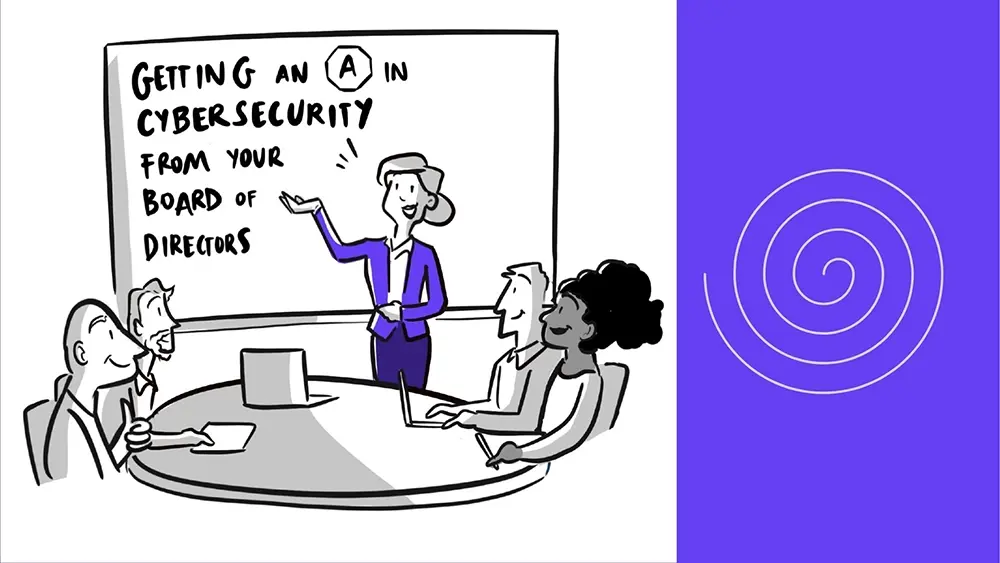
Getting an “A” in Cybersecurity From Your Board of Directors
There’s a growing communications gap between corporate boards and CISOs — and it’s putting companies at risk. This book brings together over a dozen top CISOs, CEOs, board members, and advisors to close the gap, chapter by chapter.
A Carnegie Mellon University survey found that 77% of U.S. board members rarely or never received senior leadership reports on digital privacy or security risk. Cyber risk has since become a top-tier business risk — yet most boards and CISOs still speak different languages. As the book puts it: CISOs are from Mars, and board members are from Venus.
What’s inside
How to tell if you have the right cybersecurity leader and how to test your CISO
A practical playbook for board-CISO communication, built for the boardroom, not the SOC
How to talk about ransomware, cyber insurance, and “wartime” security operations in terms the board understands
A Digital Trust Framework for managing cybersecurity as a business risk, not just an IT problem
Why trust, not just technology, is the foundation of a CISO’s success with the board
Who it’s for
CISOs and security leaders preparing for board conversations, board members and executives responsible for cyber risk oversight, and risk, compliance, and governance teams navigating the CISO-board relationship.
You’ll walk away with insights on how security executives can best communicate to the board, and what board members need to know to assess their security executives.

June 25, 2026
The Questionnaire Trap
Your TPRM program was designed to reduce risk – but bloated questionnaires, annual audit cycles, and vendor fatigue may be doing the opposite. This eBook draws on candid insights from experienced risk management practitioners to help you escape the questionnaire trap and build a smarter, more effective vendor assessment program.
Learn how to shift from a checkbox-compliance mindset to an evidence-driven approach that actually reduces third-party risk. We’ll guide you through:
Understanding why more questions don’t equal more security – and the data that proves it.
Diagnosing the three failure modes that make most questionnaires ineffective.
Adopting a documentation-first model that cuts assessment time without sacrificing rigor.
Moving from calendar-driven audits to trigger-based TPRM that responds to real risk events.
Leveraging AI as a force multiplier – while keeping human judgment where it belongs.

May 11, 2026
A Roadmap to Modern TPRM
Understanding the 4 Stages, the Gaps, and TPRM Priorities for Various Stakeholders Traditional Third-Party Risk Management (TPRM) programs, relying on static data and annual assessments, are failing to secure supply chains, exposing organizations to the 35%+ of breaches originating from third parties. This eBook provides a roadmap to understanding the disconnect between modern threats and
May 27, 2025
Securing the Supply Chain: Building Cyber Resilience in the Modern Era
Traditional third-party risk management (TPRM) programs lack the continuous visibility and actionability required in today’s dynamic cyber threat environment. They also rarely address what happens should an incident along the supply chain threaten business continuity.
This guide introduces Supply Chain Detection and Response (SCDR) as a critical augmentation to TPRM. SCDR operationalizes supply chain cybersecurity through proactive detection, continuous AI-powered monitoring, and collaborative remediation. It offers a practical path to true organizational resilience against escalating supply chain risks, moving beyond mere compliance.
This ebook will show you how to:
Understand SCDR principles and their advantages over traditional TPRM.
Implement a 10-step process for building robust SCDR capabilities.
Map dependencies, tier critical vendors, and develop tailored incident plans.
Achieve continuous visibility to proactively reduce third-party risks.
Enhance overall supply chain cyber resilience and ensure business continuity.
Supply Chain Cyber Risk
Third-Party Risk Management
Threat-Informed TPRM

May 2, 2025
The Definitive Guide to Building a Supply Chain Incident Response Team
Your organization’s security is only as strong as its weakest link – often found within the expanding network of third-party vendors. This eBook provides a practical blueprint for building a dedicated Supply Chain Incident Response Team to proactively address the escalating threat of supply chain cyberattacks.
Learn how to shift from a purely preventative TPRM strategy to a resilient posture that anticipates and effectively manages security incidents across your vendor ecosystem. We’ll guide you through:
Understanding the evolving threat landscape targeting supply chains.
Justifying the necessity of a focused incident response capability.
Defining the core functions and objectives of your team.
Identifying the essential skills and structuring your ideal team.
Developing actionable and supply chain-specific incident response plans.
Supply Chain Cyber Risk
Third-Party Risk Management
Threat-Informed TPRM

November 25, 2024
Buyer’s Guide: Supply Chain Detection and Response for Financial Services
Supply chain risks have grown in complexity and impact, yet most financial services organizations are struggling to operationalize this aspect of their security programs.
Supply Chain Detection and Response (SCDR) has emerged as a category of solutions for operationalizing the cybersecurity of your organization’s vendors or partners. It’s a transformative technology that enables third-party risk management teams to evolve into supply chain incident responders.
This guide helps you make a more informed decision about evaluating the purchase of an SCDR solution. Key topics include:
What is Supply Chain Detection and Response
How you can justify an SCDR investment and expected benefits
How to estimate the ROI you can realize by adopting SCDR
Evaluating and implementing SCDR at your organization
Financial Services
Third-Party Risk Management
Threat-Informed TPRM
November 25, 2024
Buyer’s Guide: Supply Chain Detection and Response for Healthcare
Supply chain risks have grown in complexity and impact, yet most healthcare organizations are struggling to operationalize this aspect of their security programs.
Supply Chain Detection and Response (SCDR) has emerged as a category of solutions for operationalizing the cybersecurity of your organization’s vendors or partners. It’s a transformative technology that enables third-party risk management teams to evolve into supply chain incident responders.
This guide helps you make a more informed decision about evaluating the purchase of an SCDR solution. Key topics include:
What is Supply Chain Detection and Response
How you can justify an SCDR investment and expected benefits
How to estimate the ROI you can realize by adopting SCDR
Evaluating and implementing SCDR at your organization
Healthcare
Third-Party Risk Management
Threat-Informed TPRM

November 22, 2024
Buyer’s Guide: Supply Chain Detection and Response
Supply chain risks have grown in complexity and impact, yet most organizations are struggling to operationalize this aspect of their security programs.
Supply Chain Detection and Response (SCDR) has emerged as a category of solutions for operationalizing the cybersecurity of your organization’s vendors or partners. It’s a transformative technology that enables third-party risk management teams to evolve into supply chain incident responders.
This guide helps you make a more informed decision about evaluating the purchase of an SCDR solution. Key topics include:
What is Supply Chain Detection and Response
How you can justify an SCDR investment and expected benefits
How to estimate the ROI you can realize by adopting SCDR
Evaluating and implementing SCDR at your organization
Third-Party Risk Management
Threat-Informed TPRM
October 8, 2024
Managed Services for Supply Chain Detection and Response Buyer’s Guide
AI isn’t what’s going to be the hot topic of the next year; it’s going to be data breaches in the supply chain and the cost that companies face by not reacting quickly to this emerging threat. The cyber attack on Change Healthcare, one of the world’s largest health payment processing companies, illustrates this point.
The time for action is now. A managed service for supply chain detection and response (SCDR) is the solution to identify and mitigate these growing threats proactively. What should you look for when evaluating managed services for SCDR for your organization? Download our buyer’s guide to discover:
The current state of supply chain cyber risk management and what’s driving the cyber blind spot within most TPRM programs
What is and isn’t a managed service for SCDR
Core capabilities of a managed service for SCDR and how to leverage one at your organization
How to measure the success of your TPRM program and prioritize improvements
Supply Chain Cyber Risk
Third-Party Risk Management
Threat-Informed TPRM

October 8, 2024
Managed Services for Supply Chain Detection and Response Buyer’s Guide
AI isn’t what’s going to be the hot topic of the next year; it’s going to be data breaches in the supply chain and the cost that companies face by not reacting quickly to this emerging threat. The cyber attack on Change Healthcare, one of the world’s largest health payment processing companies, illustrates this point.
The time for action is now. A managed service for supply chain detection and response (SCDR) is the solution to identify and mitigate these growing threats proactively. What should you look for when evaluating managed services for SCDR for your organization? Download our buyer’s guide to discover:
The current state of supply chain cyber risk management and what’s driving the cyber blind spot within most TPRM programs
What is and isn’t a managed service for SCDR
Core capabilities of a managed service for SCDR and how to leverage one at your organization
How to measure the success of your TPRM program and prioritize improvements
Supply Chain Cyber Risk
Third-Party Risk Management
Threat-Informed TPRM

June 26, 2024
Why the FAIR Model Can Be So Unfair
Explore the benefits and limitations of the Factor Analysis of Information Risk (FAIR) model and what the future holds for cyber risk management.

January 12, 2024
Evolve from Risk Management to Risk Intelligence
Proven Strategies to Drive a Risk Intelligence Program in Your Organization
December 14, 2023
C-Suite Liability and Cybersecurity: Strategies for Navigating a New Era of Enforcement
The role of the CISO was already a stressful one, with significant retention issues and burnout risk. In short, the personal and professional stakes for CISOs just got higher. A recent survey reveals that 62% of CISOs are concerned about being held personally\r\nliable for cyberattacks that occur on their watch.\r\n \r\nIn the following pages, we’ll explore strategies that CISOs and other C-Suite executives can use to boost their organizations’ cyber resilience while also protecting themselves from legal fallout.

September 11, 2023
5 Steps You Can Take To Boost Your Boards Involvement And Stay Compliant
PoshC2 is an open-source C2 framework used by penetration testers and threat actors. It can\r\ngenerate a Powershell-based implant, a C#.NET implant that we analyze in this paper, and a\r\nPython3 implant. The malware retrieves the current Windows user, the network domain name\r\nassociated with the current user, the computer name, the processor architecture, the current\r\nprocess name and id, and the path of the Windows directory. The network communication is\r\nencrypted using the AES algorithm with a hard-coded key that can be changed by the C2\r\nserver. The C# implant can load and execute modules in memory without touching the disk by\r\nusing multiple commands. It can perform post-exploitation activities by loading tools such as\r\nSharpHound, Rubeus, SharpView, and Seatbelt.
September 6, 2023
DORA: A Journey To Cyber Resilience
In January 2023, a pivotal regulation took center stage for the European Union (EU) financial services sector. The Digital Operational Resilience Act (DORA) emerged as a requirement, ushering in a new era of cybersecurity.
DORA
August 30, 2023
5 Tips To Know You Are Using Data You Can Trust
Organizations need to trust their data and be confident that their customers, clients, and vendors can trust it as well. This means knowing that it’s accurate, reliable, and secure. How can this be accomplished?

August 30, 2023
4 Factors To Consider When Evaluating A Cybersecurity Partner
How should you evaluate a partner you work with? This guide can help you make informed choices about business partners.

March 10, 2023
5 Steps to Avoid Cyber Incident
According to a recent Gartner report, by 2025, a lack of talent or human failure will be responsible for over half of significant cyber incidents. And with the average cost of a data breach now at $4.35 million, it’s time for organizations to take proactive measures to protect themselves against cyber threats. This ebook was written with experts from SecurityScorecard’s Digital Forensics and Incident Response team, who have decades of experience working with companies to respond to cyber incidents. Here, these experts provide practical guidance for protecting your organization against cyber threats and mitigating their associated risks for CEOs and CISOs.
Cyber Insurance